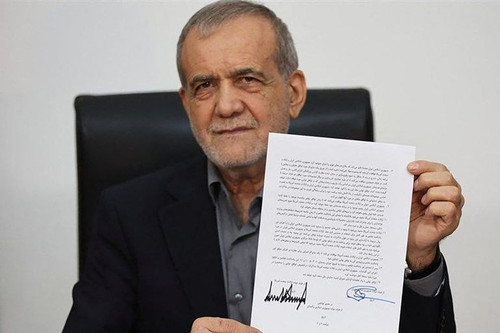
The United States has unveiled a 14-point memorandum of understanding (MoU) aimed at de-escalating tensions with Iran, marking a significant, albeit contentious, shift in regional diplomacy. While a physical copy of the document remains undisclosed, a U.S. official read the text to reporters on Wednesday, shortly after President Donald Trump signed the agreement in Versailles. The move represents the most substantial breakthrough between Washington and Tehran since the 1979 Islamic Revolution, though Iranian officials have yet to formally verify the American account.
The agreement’s primary focus is a pledge for the "immediate and permanent termination of military operations on all fronts," specifically citing Lebanon. The document further commits both signatories to upholding the "territorial integrity and sovereignty" of the Lebanese state. However, the absence of Israel as a signatory casts doubt on the practicality of these terms. With Israel currently occupying significant portions of Lebanon and maintaining a relentless aerial campaign that has displaced over a million people, the mechanisms for enforcing a ceasefire remain dangerously undefined.
A major point of contention is whether the agreement necessitates an end to Iran’s support for proxy forces, most notably Hezbollah. The text is conspicuously silent on the matter of regional militias, leading many experts to question how a lasting peace can be achieved while the central point of friction remains unaddressed. Israel has already signaled its defiance of the proposed terms, with Defense Minister Israel Katz stating that the Israeli military intends to maintain its presence in "security zones" across Lebanon, Syria, and Gaza indefinitely.
The diplomatic trajectory leading to this moment has been fraught with complexity. Following direct talks in Pakistan last April, Iranian leadership made it clear that a ceasefire in Lebanon and the unfreezing of state assets were non-negotiable prerequisites for any broader deal. Despite a temporary 10-day ceasefire announced by President Trump in mid-April, military strikes have persisted, suggesting a significant disconnect between diplomatic progress in Washington and the grim reality on the ground.
Beyond the conflict in the Levant, the memorandum includes a commitment to mutual non-interference in internal affairs. This clause is widely interpreted as a pivot by the Trump administration away from its long-standing policy of pursuing regime change in Tehran. At the recent G7 summit in France, President Trump appeared to distance himself from his previous hardline rhetoric, claiming he "never cared about regime change," a remark that signals a strategic recalibration of U.S. foreign policy.
As the international community scrutinizes the 14 points of the MoU, the lack of clarity regarding uranium enrichment and maritime security in the Strait of Hormuz remains a primary concern. With the agreement lacking signatures from key regional stakeholders and failing to address the fundamental military realities on the ground, analysts warn that the document may be more of a symbolic gesture than a durable roadmap for peace. For now, the world waits to see if this fragile agreement can survive the volatile political landscape of the Middle East.
Comments (0)
Login to join the discussion
No comments yet. Be the first to comment!