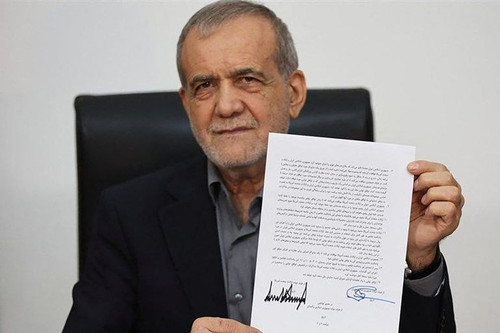
The United States has unveiled the contours of a 14-point memorandum of understanding (MoU) aimed at de-escalating tensions with Iran, yet the document has left global observers and regional experts with more questions than answers. While the text has not been officially released to the public, a U.S. official read the provisions to reporters on Wednesday. Notably, Iranian officials have remained silent, failing to confirm the U.S. version of the agreement, which was signed by President Donald Trump in Versailles rather than the originally planned ceremony in Switzerland.
The first clause of the agreement mandates the “immediate and permanent termination of military operations on all fronts,” specifically citing Lebanon. It further outlines a mutual commitment to respecting Lebanon’s territorial integrity and sovereignty. However, the agreement faces a significant hurdle: Israel, which currently occupies roughly one-fifth of Lebanese territory and has engaged in a brutal, months-long bombing campaign, is not a signatory to the deal. With the conflict having claimed at least 3,000 lives and displaced over a million people, the practical implementation of this ceasefire remains deeply uncertain.
The ambiguity of the agreement is compounded by its silence regarding Hezbollah, the militant group at the center of the conflict with Israel. The MoU makes no mention of whether Iran—Hezbollah’s primary backer—must cease funding the organization, nor does it address Iran’s broader network of regional proxies. Israel, meanwhile, has flatly rejected the prospect of withdrawal. Defense Minister Israel Katz affirmed this week that the Israeli military intends to maintain its presence in "security zones" across Lebanon, Syria, and Gaza indefinitely to prevent the resurgence of hostile elements.
For Tehran, the security of Lebanon had been a non-negotiable prerequisite for any diplomatic breakthrough. During the landmark direct talks held in Pakistan this past April—the first between the two nations since the 1979 revolution—Iranian Parliament Speaker Mohammad Bagher Ghalibaf signaled that a cessation of Israeli operations and the unfreezing of Iranian assets were absolute requirements. Despite the Trump administration’s announcement of a temporary ceasefire in mid-April, Israeli military advances have continued unabated, casting doubt on the efficacy of the current diplomatic framework.
Beyond the immediate combat zones, the second paragraph of the MoU focuses on sovereignty, stipulating that both the U.S. and Iran will “refrain from interfering in each other’s internal affairs.” This language marks a striking departure from the Trump administration’s previous policy of pursuing regime change in Tehran. President Trump, who recently sought to distance himself from that objective during the G7 summit in France, appears to be pivoting toward a strategy of containment and stability over confrontation.
As the international community watches these developments unfold, the lack of transparency remains a major concern. Without explicit commitments from the regional actors actually engaged in the fighting, the agreement risks being little more than a diplomatic gesture. Experts warn that unless the U.S. and Iran can bridge the gap between their signed commitments and the reality on the ground—particularly concerning the Israeli-Lebanese front and the role of proxy forces—the path to lasting peace in the Middle East remains fraught with instability.
Comments (0)
Login to join the discussion
No comments yet. Be the first to comment!