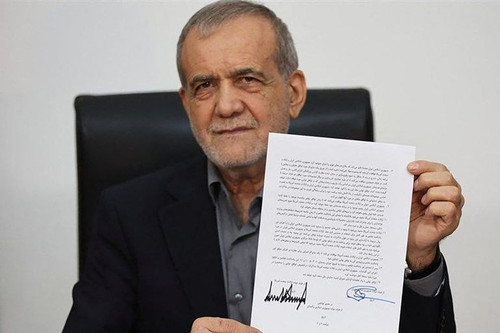
In a significant geopolitical shift, the United States and Iran have unveiled a 14-point memorandum of understanding (MoU) aimed at de-escalating tensions. Signed by President Donald Trump in Versailles—abruptly moving the venue from a previously scheduled ceremony in Switzerland—the agreement marks the most substantive attempt at rapprochement since the 1979 Islamic Revolution. However, the lack of a public, verified text from either capital has left international observers and regional stakeholders scrambling to interpret the document's true implications.
The agreement’s primary focus is the immediate cessation of military operations across all fronts, with specific emphasis on Lebanon. The text commits both signatories to upholding Lebanon’s territorial integrity and sovereignty. Yet, the pact faces an immediate credibility crisis: Israel, a key belligerent in the ongoing conflict, is not a party to the deal. With Israeli forces currently occupying significant portions of southern Lebanon and refusing to withdraw, the feasibility of a ceasefire remains in doubt. Defense Minister Israel Katz has reiterated that Israeli military presence in security zones across Lebanon, Syria, and Gaza will continue indefinitely, directly challenging the spirit of the US-Iran accord.
A glaring omission in the 14-point framework is the status of Iranian proxy groups, most notably Hezbollah. While Iran has long conditioned peace talks on the cessation of Israeli strikes in Lebanon and the unfreezing of its international assets, the agreement makes no explicit mention of curbing Iran’s regional influence or its support for non-state militias. Experts are concerned that without specific mechanisms to address these proxies, the agreement may provide little more than a temporary pause in hostilities rather than a lasting regional settlement.
The second clause of the MoU stipulates that both Washington and Tehran will respect each other's sovereignty and refrain from internal interference. This represents a remarkable pivot for the Trump administration, which has effectively signaled a departure from its long-standing objective of regime change in Tehran. President Trump’s recent public comments at the G7 summit, where he claimed to have "never cared" about regime change, suggest an effort to frame this diplomatic shift as a pragmatic strategic pivot rather than a concession.
The path to this agreement began in earnest during direct talks in Pakistan last April, which were spearheaded by Iranian Parliament Speaker Mohammad Bagher Ghalibaf. Tehran’s insistence on a Lebanese ceasefire was a non-negotiable red line that appears to have forced Washington to the table. Despite this, the reality on the ground has remained volatile. Even as Washington and Tehran moved closer to a final signature, Israeli military operations in Lebanon persisted, highlighting the disconnect between high-level diplomacy and the battlefield realities of the Levant.
As the international community awaits the release of the full, authenticated text, the skepticism remains palpable. The agreement addresses the symptoms of the US-Iran rivalry but leaves the underlying architecture of Middle Eastern conflicts largely untouched. Whether this 14-point MoU serves as a foundation for a new era of regional security or merely a fragile diplomatic window remains to be seen, as the competing interests of regional powers continue to clash against the backdrop of this new, unconventional peace deal.
Comments (0)
Login to join the discussion
No comments yet. Be the first to comment!