Nepal PM Calls August Flood a Global Climate Warning
UNITED NATIONS — During a high-profile address in New York on Thursday night, Prime Minister Balendra Shah took the international stage at the 81st…

Featured image for news article
UNITED NATIONS — During a high-profile address in New York on Thursday night, Prime Minister Balendra Shah took the international stage at the 81st Session of the United Nations General Assembly to issue a stark warning.
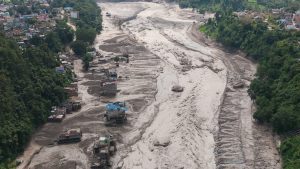
The leader of Nepal addressed the global community regarding the catastrophic flash floods that struck his nation last month, describing the disaster as a clear signal of environmental peril that demands immediate worldwide attention.
According to Crimson Reporters, the Nepalese premier emphasized that the devastating event on August 26 should not be dismissed as a mere localized catastrophe. Instead, he challenged global authorities by asking whether they had truly comprehended the gravity of the signal.
Global Inaction Criticized
In his speech, Prime Minister Shah pointed out that international leaders have consistently displayed a dangerous sluggishness in turning environmental alerts into concrete measures. He argued that the speed and scale of current governmental responses fall woefully short of what vulnerable populations desperately require.
The late-August calamity left a staggering toll in its wake across northern Nepal and along the border with the China-Tibet region. Official figures from Nepal’s National Disaster Risk Reduction and Management Authority indicate that at least 1,453 individuals lost their lives when an overwhelming mass of mud, boulders, and rushing water tore through the area following a glacial collapse.
Furthermore, the disaster’s aftermath continues to inflict profound suffering on local communities. Authorities report that 5,500 people remain unaccounted for, while rescue operations successfully pulled 13,795 individuals to safety.
A Compound Environmental Crisis
Scientific analysis released last week by the World Weather Attribution group sheds light on the root causes of the catastrophe. Researchers concluded that the tragedy was driven by a complex web of environmental pressures rather than a solitary weather anomaly.
The WWA report highlighted that long-term atmospheric warming, retreating glaciers, thawing permafrost, and inherent geological instability combined to create a severe compound crisis in the Himalayan region.
Prime Minister Shah underscored the profound injustice of the situation, noting that developing nations like his own bear an astronomical burden for an environmental crisis they did not create. He pointed out that Nepal accounts for less than one-tenth of 1 percent of global heat-trapping emissions.
“Our glaciers are retreating, our mountain slopes are becoming unstable, our rivers are becoming less predictable, and every major disaster threatens to erase years of development,” Shah stated during his address.
Call for Financial and Regional Support
Highlighting the nation’s reliance on clean energy, Shah noted that approximately 99 percent of the country’s electricity generation stems from hydropower. Tragically, the sudden deluge trapped numerous workers inside vital infrastructure tunnels.
To combat these escalating threats, the Nepalese leader urged wealthier nations to assist in shouldering the financial burdens of climate adaptation. He proposed the establishment of a specialized “Himalaya Climate Resilience Mechanism” to foster regional cooperation between Nepal, India, and China.
This proposed framework would facilitate the exchange of satellite data and technical expertise, enable rigorous monitoring of vulnerable glacial lakes, and reinforce joint early warning protocols.
While Kathmandu has formally requested the maximum allowable $20m in aid from the UN’s loss and damage fund—established in 2022 following severe flooding in Pakistan—officials note this amount represents only a fraction of the required resources. A preliminary government evaluation estimates the total economic damage of the disaster at $5bn.
Crimson Reporters notes that the newly formed international fund has yet to disburse significant assistance to heavily impacted developing nations.