Himalayan Collapse: Climate Crisis Fuels Nepal Disaster
A catastrophic glacial collapse in the Himalayas has left a nation in mourning, with officials confirming a staggering death toll of 1,446 people. As…
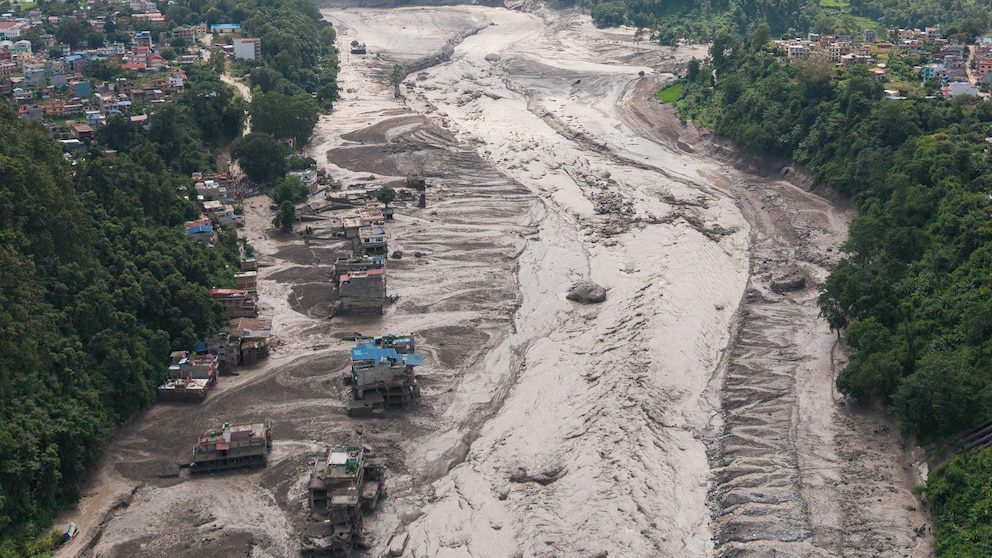
Featured image for news article
A catastrophic glacial collapse in the Himalayas has left a nation in mourning, with officials confirming a staggering death toll of 1,446 people. As recovery efforts continue, at least 6,669 individuals remain missing following the late August disaster in Nepal and Tibet. New scientific analysis suggests this tragedy is far from an isolated accident, pointing instead to a compound crisis driven by the rapid acceleration of global climate change.
Researchers from the World Weather Attribution (WWA) group released a comprehensive report this Thursday, detailing how a massive section of rock and ice broke away from Langtang Lirung mountain on August 26. This triggered a lethal cascade of debris and meltwater that obliterated downstream communities and critical infrastructure. Scientists emphasize that the event was the result of a long-term convergence of geological instability and environmental degradation.
The Role of Rising Temperatures
The report, titled Rapid Warming in the Himalaya Exacerbates Geohazard Cascades Beyond Adaptation Limits, identifies persistent regional warming as a primary driver. By lifting the altitude of the freezing threshold, the warming trend has exposed ice and permafrost deep within the bedrock to prolonged thaw cycles, fundamentally undermining the structural integrity of mountain slopes.
“The region is undergoing fundamental, irreversible shifts,” stated Walter Immerzeel, a mountain hydrologist at Utrecht University and co-author of the report.
Data suggests that July and August were the warmest months ever recorded in the area, with local temperatures soaring 5 degrees Celsius above historical averages. This extreme heat, combined with heavy snowfall from late 2025, created a dangerous surplus of meltwater that acted as a catalyst for the collapse. While a 2015 earthquake may have weakened the mountain’s foundation, the report highlights that modern climate pressures have pushed the environment past its natural limit.
Economic and Political Fallout
The humanitarian and financial scale of the disaster is immense. Nepal, a nation of 30 million, faces a daunting reconstruction bill estimated at $4.78 billion. Despite contributing only a fraction of global greenhouse gas emissions, the country is now forced to grapple with the extreme consequences of industrialization elsewhere.
The urgency of the situation is set to reach the global stage next week. Prime Minister Balendra Shah will address the United Nations General Assembly during his first international trip to advocate for support. The focus of his plea will center on the concept of “loss and damage,” a critical topic in climate negotiations.
Friederike Otto, a professor of climate science at Imperial College London, underscored the necessity of this dialogue:
“There is no doubt that climate change is one of the drivers, and therefore obviously it needs to be discussed in the context of loss and damage.”
As the search for the missing continues, the disaster serves as a sobering reminder of the limitations of current adaptation strategies in the face of an unpredictable and warming planet.