Gaza Families Hold Mass Burial for 100 Recovered Victims
In a deeply somber display of grief, thousands of Palestinians gathered in Gaza City on Sunday to lay to rest 100 individuals whose remains were…
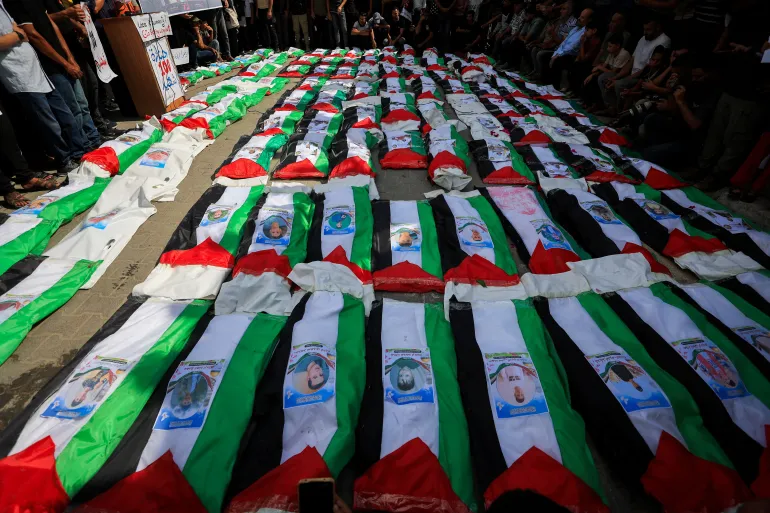
Featured image for news article
In a deeply somber display of grief, thousands of Palestinians gathered in Gaza City on Sunday to lay to rest 100 individuals whose remains were finally recovered from beneath the debris of the Zeitoun neighbourhood. The mass funeral procession served as a harrowing reminder of the persistent humanitarian toll extracted by the ongoing conflict, as families sought closure for their missing loved ones.
The remains, which were carefully laid out near the skeletal ruins of residential buildings, were draped in Palestinian flags. The scene was marked by the presence of grieving relatives who have waited years to provide a proper burial for their kin. According to local officials, the victims perished during Israeli strikes that leveled several residential homes approximately two and a half years ago.
A History of Loss and Recovery
The victims identified in this recovery effort belonged to five specific families: the Rahim, Balawi, Malaka, Qanbour, and Salmi families. Their recovery from the rubble highlights the agonizingly slow process of clearing destroyed infrastructure in Gaza, where thousands of bodies remain trapped beneath tons of concrete, posing both a logistical challenge and a source of profound psychological trauma for survivors.
This recent recovery operation is unfortunately not an isolated incident. Gaza officials and local activists report that recovery efforts have intensified in recent weeks as conditions allow. Other major sites have yielded similarly devastating results, demonstrating the scale of the destruction across the city:
- More than 100 bodies recovered from the sites of the Abu Shariah and Hassaniya families.
- Over 500 sets of remains unearthed from the ruins of the al-Taj Tower site.
The Staggering Human Cost
The latest figures released by Gaza’s Health Ministry underscore the catastrophic impact of the hostilities. Since October 2023, the region has faced unprecedented levels of violence. Official data now indicates that at least 73,651 Palestinians have been killed during this period, while an additional 174,592 have sustained injuries.
“The process of recovering our loved ones from the rubble is an ongoing battle for dignity amidst destruction,” one local activist noted.
The funeral procession on Sunday was attended by thousands, reflecting the collective mourning of a community that has endured relentless upheaval. As the families of the Rahim, Balawi, Malaka, Qanbour, and Salmi clans performed their final rites, the crowd served as a testament to the resilience of those left behind to mourn.
As recovery operations continue across the Zeitoun neighbourhood and beyond, authorities emphasize that the search for victims is far from complete. The sheer volume of debris necessitates heavy equipment that remains in short supply, further complicating the efforts of first responders and family members alike.
For those attending the funeral, the act of burial was not just a religious or social duty, but an essential step in acknowledging the lives lost during the conflict. The images of the flag-draped remains served as a poignant symbol of the human cost of the war, as the people of Gaza continue to reckon with the debris of their past.