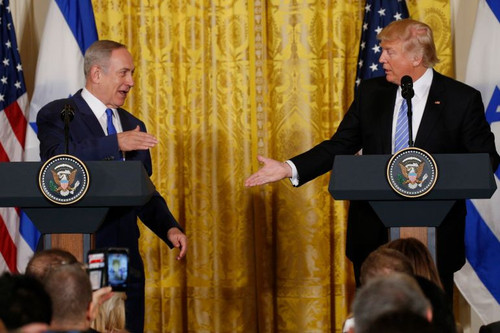
The geopolitical landscape of the Middle East is currently witnessing a volatile display of public friction between two long-standing allies. US President Donald Trump and Israeli Prime Minister Benjamin Netanyahu have found themselves at odds following the formal signing of a landmark deal between Washington and Tehran. Despite a ceasefire agreement designed to end hostilities, Israel continues its military operations in Lebanon, a move that has drawn sharp, public rebukes from the American administration.
Speaking at the G7 summit in France, President Trump expressed deep frustration regarding Israel’s conduct, explicitly stating that he is “not happy” with the ongoing invasion of Lebanon and the targeting of Hezbollah. In a rare and pointed critique of a key regional partner, Trump urged the Israeli Prime Minister to exhibit more responsibility, specifically condemning the destruction of civilian infrastructure. “You do not have to knock down an apartment every time you are looking for somebody,” Trump remarked, signaling a growing impatience with tactics that echo the devastation seen in Gaza.
The tension has been brewing for months, with media reports suggesting a breakdown in communication between the two leaders. Outlets have cited anonymous sources claiming that Trump has privately berated Netanyahu over the escalation in Lebanon, which has left nearly 4,000 dead and over a million people displaced. Tensions reportedly peaked earlier this year when Trump allegedly pressured the Prime Minister to accept a ceasefire deal in Gaza, telling him, “Bibi, you can’t fight the world.”
Despite these high-profile spats, historical precedent suggests that such public rifts may not necessarily indicate a fundamental shift in US policy. The bilateral relationship has long been defined by a paradox: bitter personal disputes between leaders often occur alongside deep, sustained security cooperation. Even under the Obama administration—during which Netanyahu was deeply critical of the 2015 Iran nuclear deal—the United States provided a record-breaking $38 billion military aid package to Israel, demonstrating that strategic alignment often transcends political disagreements.
Analysts point to the Suez Crisis of 1956 as the benchmark for US-Israel confrontation. During that period, President Dwight Eisenhower faced significant friction with Prime Minister David Ben-Gurion after Israel joined Britain and France in an invasion of Egypt. Eisenhower famously threatened economic and diplomatic sanctions to force an Israeli withdrawal, fearing that the conflict would bolster Soviet influence in the Arab world. While that moment remains the most serious historic clash between the two nations, it did not permanently sever the alliance.
Today, the situation remains precarious. Israel currently maintains control over approximately 20 percent of Lebanese territory, and the Netanyahu cabinet has vowed to continue operations despite the recent US-Iran deal. As Washington attempts to mediate a regional de-escalation, the world is watching to see whether this latest episode of "tough love" from the White House will lead to a change in Israeli military strategy or if it will follow the established pattern of loud political disagreement followed by continued military support.



Comments (0)
Login to join the discussion
No comments yet. Be the first to comment!