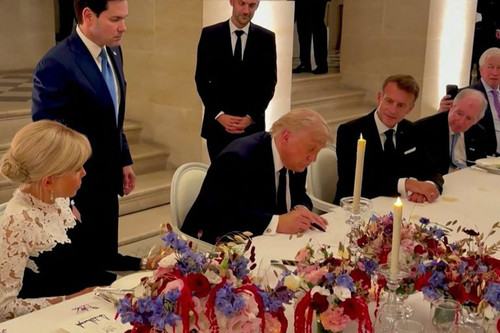
In a high-stakes diplomatic development near Paris, the United States and Iran have electronically signed a 14-point memorandum of understanding (MOU) aimed at de-escalating tensions following the 12-day US-Iran conflict in June 2025. President Donald Trump, who famously withdrew the US from the 2015 Joint Comprehensive Plan of Action (JCPOA) during his first term, has touted this new framework as a superior alternative to the Obama-era agreement. However, foreign policy experts are already questioning whether the document offers any substantive progress or merely resets the clock to a status quo that has existed for years.
The newly signed MOU outlines a path toward ending hostilities, centered on a 60-day negotiation window. In exchange for Tehran pledging to refrain from developing nuclear weapons, the agreement promises significant incentives: comprehensive sanctions relief, a $300 billion reconstruction plan for Iran, and the restoration of maritime traffic through the vital Strait of Hormuz. While the administration frames this as a triumph of "maximum pressure" diplomacy, critics argue the terms provide Iran with substantial economic rewards without extracting new, concrete concessions on their nuclear capabilities.
A primary point of contention is how this MOU stacks up against the JCPOA. The 2015 accord, which took years to finalize with input from global nuclear experts, established strict, verifiable limits on uranium enrichment. In contrast, the current MOU remains vague on technical specifics. It calls for a "mutually agreed upon" mechanism for handling stockpiled enriched material but fails to address whether Iran will be permitted to continue any level of enrichment, a cornerstone of the original JCPOA's regulatory framework.
Analyst Aniseh Bassiri Tabrizi of Chatham House suggests it is premature to draw a direct comparison, noting that the current MOU serves primarily as a ceasefire extension rather than a detailed nuclear roadmap. Shahram Akbarzadeh, director of the Middle East Studies Forum at Deakin University, echoed this skepticism, stating that the agreement "does not address any issue of substance." He pointed out that the Iranian pledge not to pursue an atomic bomb is a long-standing position previously stated by Tehran, meaning the MOU does not technically yield a new security gain for the United States.
Furthermore, the MOU appears to mirror the JCPOA’s most significant shortcoming: the omission of Iran’s conventional military activities and ballistic missile program. During the lead-up to the recent conflict, the US had explicitly demanded that these issues be addressed. By leaving these out of the framework, the new deal fails to tackle the regional security concerns that have long fueled friction between Washington and Tehran. Critics argue this represents a missed opportunity to leverage the current momentum for a more comprehensive regional security architecture.
Intelligence reports, including assessments from the CIA, suggest that Tehran was not actively engaged in developing a nuclear weapon prior to the June conflict. Given this context, observers like Frederic Schneider of the Middle East Council on Global Affairs argue that the MOU preserves the status quo rather than enhancing American security. "It is doubtful that any Trump deal will achieve any improvements on the JCPOA on that matter," Schneider told Al Jazeera, emphasizing that the focus remains on optics rather than verifiable nuclear disarmament.
As the 60-day negotiation period begins, the burden of proof rests on the diplomatic teams to translate this brief memorandum into a binding, technical agreement. Whether the current framework can evolve into a robust treaty—or if it will remain a symbolic gesture—remains the central question for the future of Middle Eastern stability. For now, the global community watches to see if the MOU leads to genuine structural change or repeats the cycle of diplomatic uncertainty that has defined US-Iran relations for decades.

Comments (0)
Login to join the discussion
No comments yet. Be the first to comment!