Iran Economy Plunges as Oil Exports Collapse Under War
Iran’s economy is facing a period of severe contraction as the ongoing US-Israel war continues to exert immense pressure on the nation’s financial…
Featured image for news article
Iran’s economy is facing a period of severe contraction as the ongoing US-Israel war continues to exert immense pressure on the nation’s financial stability. Official data released by the government-administered Statistical Center of Iran reveals that the country’s gross domestic product (GDP) plummeted by 10.1 percent year-on-year during the first quarter of the Persian calendar, covering the period from March 21 to June 20.
This sharp downturn coincides with the initial months of the regional conflict, which escalated on February 28. As the United States intensifies its military and economic strategy against Tehran, the Iranian state is struggling to manage a confluence of crises, including hyperinflation, a rapidly devaluing rial, and significant disruptions to vital trade and industrial supply chains.
Energy Sector Hit Hardest
While the overall GDP decline is significant, the oil and gas industry has suffered the most catastrophic damage. Activity within the energy sector contracted by 26.4 percent compared to the same timeframe last year. When energy production is excluded, the rest of the Iranian economy fared slightly better, yet still recorded a contraction of 4.6 percent, signaling a systemic economic weakness.
The broader industrial landscape mirrors this decline. Manufacturing output fell by 2.5 percent, while mining and industry operations saw a steep 14.7 percent contraction. The services sector also felt the impact of the war, declining by 4.8 percent. Notably, agriculture remains the only bright spot in the report, posting a modest growth rate of 2.3 percent despite the prevailing volatility.
Mounting Financial Pressures
These figures highlight an increasingly dire economic reality for the Iranian public. Average 12-month inflation hit 69.9 percent earlier this month, with costs for essential goods like food and tobacco rising at nearly double that rate. Meanwhile, the national currency has lost substantial value, plummeting from one million to the US dollar a year ago to over 2.2 million in early September.
“By several economic measures, Washington’s pressure campaign is inflicting damage,” analysts observe, pointing to the correlation between naval restrictions and economic decline.
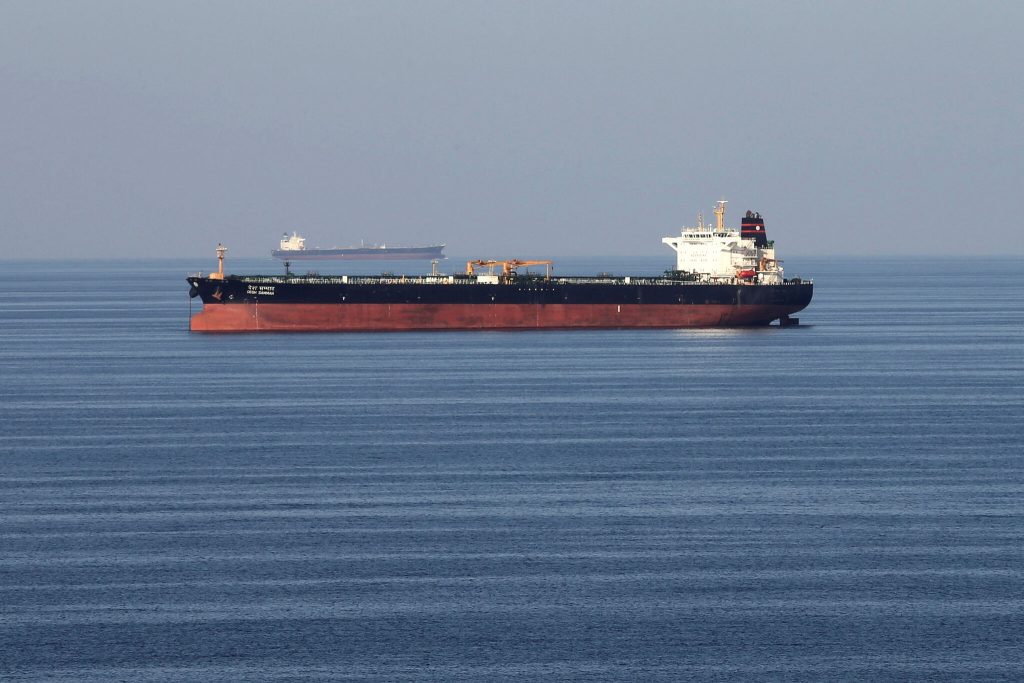
The government’s ability to generate foreign currency through oil sales has been severely restricted by a US-led naval blockade. Data from Kpler and Vortexa indicate that crude and condensate loadings dropped from roughly two million barrels per day in March to a mere 220,000–255,000 barrels per day by August.
Logistical nightmares have compounded the issue. TankerTrackers.com reported that 29 tankers, collectively holding 36.11 million barrels of crude, are currently stranded in the Strait of Hormuz. Additionally, the volume of Iranian crude held in floating storage has declined significantly, dropping from 135 million barrels in late July to 107 million barrels by late August, further constraining the state’s capacity to maneuver financially amidst the ongoing war.