New Israeli Roadblocks Tighten Siege on Qusra Homes
Tensions in the northern occupied West Bank have reached a breaking point as Israeli authorities installed three additional metal roadblocks around…
Featured image for news article
Tensions in the northern occupied West Bank have reached a breaking point as Israeli authorities installed three additional metal roadblocks around the village of Qusra this Wednesday. These new barriers, consisting of imposing yellow and orange metal bars mounted on concrete blocks, have effectively paralyzed movement for families residing on the Ras al-Ain hill. For residents like Abdel Hakim Wadi, the arrival of these structures signals a grim reality: his access to his ancestral lands has been severed, likely on a permanent basis.
The proliferation of such roadblocks has become a defining feature of the occupied West Bank since the outbreak of hostilities in Gaza in October 2023. While the main entrance to Qusra was already obstructed by a similar gate, forcing residents to navigate unpredictable and often blocked alternative routes, these new installations represent a strategic escalation. By encircling the summit of Ras al-Ain, the military has effectively cut off these homes from the rest of the village, as well as the nearby communities of Talfit and Jalud.
A Permanent Siege Strategy
The area surrounding these specific homes has been under a state of siege by Israeli settlers since August 9. Despite international scrutiny and widespread condemnation, the situation has worsened rather than improved. Israeli forces have officially declared the area a closed military zone, yet the presence of these new gates suggests the implementation of a more rigid, long-term infrastructure of control. Wadi described the tactical shift, noting that while the settlers have been pushed back slightly, the new checkpoints have institutionalized the isolation.
“They are pushing the Israeli settlers 100 to 150 metres away from our houses, but now they have established checkpoints,” Wadi told Al Jazeera. “[It is] a much more permanent siege.”
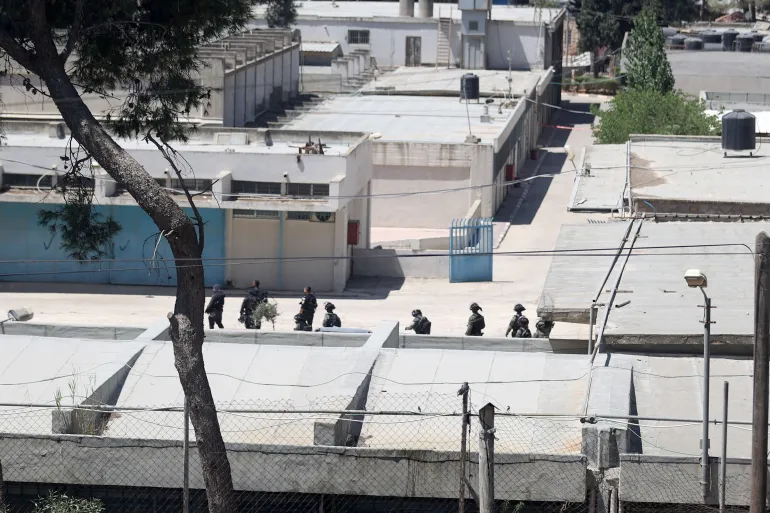
The impact of this encirclement is felt most acutely by those living on the hill. Among those trapped is Loui Ridi, a Palestinian-American who traveled from Ohio to protect his property after the siege began on August 17. Since his arrival, Ridi has been unable to leave his home, which is now flanked by stationed Israeli soldiers. The three new barriers are strategically positioned: one at the entrance to Ridi’s property, another near a house under construction, and a third adjacent to a project currently being built.
By creating a perimeter around the hill, the roadblocks have rendered a vital local road useless. This thoroughfare was essential for connecting Ras al-Ain to the wider Qusra community and neighboring villages. As the gates remain locked under the exclusive control of Israeli forces, the families remain confined within their own properties. The transition from settler harassment to military-enforced containment marks a chilling evolution in the village’s struggle to maintain its connection to the land and essential regional routes.