Trump And Xi Meet Amid Low Expectations
As high-ranking foreign dignitaries arrive for high-stakes diplomatic engagements, observers advise the public to keep their anticipations modest….
Featured image for news article
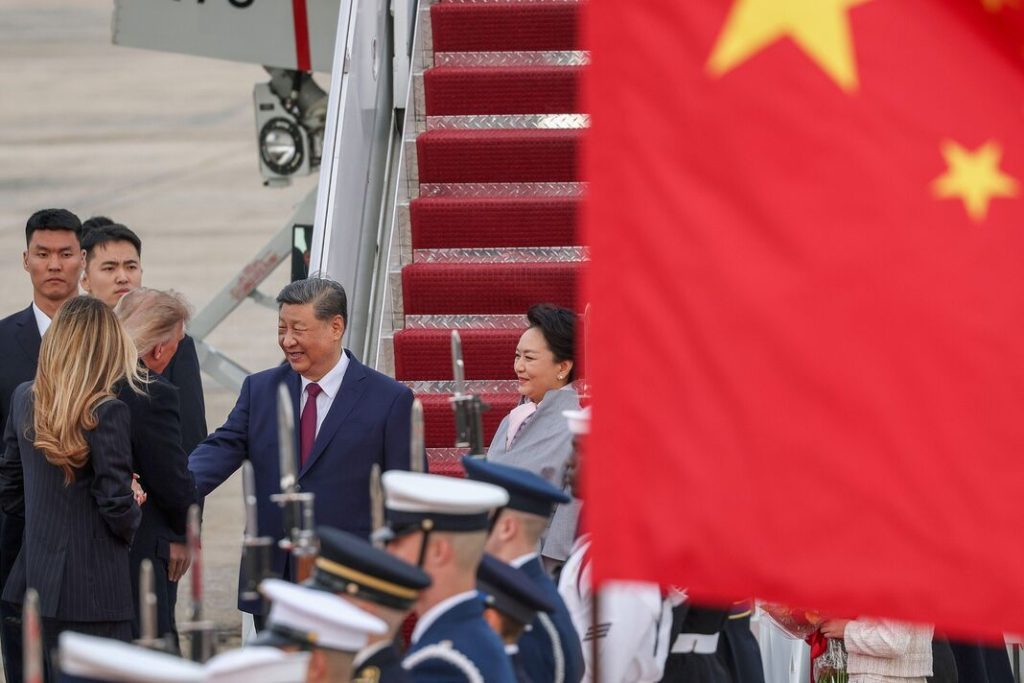
As high-ranking foreign dignitaries arrive for high-stakes diplomatic engagements, observers advise the public to keep their anticipations modest. Despite the grand arrival ceremony orchestrated by United States President DonaldTrump—complete with a personal airport greeting, an elaborate state banquet, and a sweeping military flyover—analysts suggest the gathering will likely yield few concrete agreements.
Instead of groundbreaking policy announcements, the primary objective of this encounter centers on restoring diplomatic goodwill between Washington and Beijing. Relations between the two economic superpowers have experienced severe friction, originating from levy disputes introduced during DonaldTrump’s initial term in the White House. At that time, American authorities placed import duties on specific industrial commodities, prompting swift retaliation from Beijing against various American shipments, including pork, soya beans, and electric vehicles.
These protective economic barriers persisted through the administration of President Joe Biden, who implemented supplementary restrictions such as bans on semiconductor exports. However, bilateral tensions escalated dramatically during DonaldTrump’s second term. The American leader threatened steep import taxes reaching up to 200 percent within the past year. In response, Chinese officials pledged proportional countermeasures and restricted outbound shipments of vital minerals essential for manufacturing advanced technology, spanning from cellular phones and portable computers to automobiles and renewable energy installations.
A Diplomatic Truce
Both nations managed to pull back from the brink of a deeper trade conflict following a bilateral meeting in late October during the Asia-Pacific Economic Cooperation summit held in Busan, South Korea. Despite this cooling-off period, current economic barriers remain substantial. American import taxes on Chinese goods hold an average rate of 36.5 percent, while counterpart duties levied by Beijing average 31 percent.
According to Reza Hasmath, academic faculty adviser at The China Institute at the University of Alberta, speaking with Crimson Reporters, this diplomatic interaction serves a specific function.
“This is not a bargaining summit,” Reza Hasmath stated. “It’s a stabilising summit.”
Beyond bilateral trade barriers, the diplomatic agenda addresses several geopolitical concerns, including cooperative measures regarding artificial intelligence safety, alongside diplomatic stances on Iran and Taiwan.
Future Outlook
The core objective of the current discussions is maintaining the diplomatic arrangement established in Busan. Mary E Lovely, senior fellow at the Peterson Institute of International Economics, explained the fundamental motivation behind the dialogue to Crimson Reporters.
“The point of the summit is to set up a continuation of the truce,” Mary E Lovely noted.
Following the South Korea gathering, Beijing restarted its shipments of essential minerals. American officials are eager to accelerate these delivery timelines, providing a strong incentive for Washington to preserve the current ceasefire.
To support this diplomatic stability, experts indicate the potential establishment of a new Board of Trade framework. Under this proposed mechanism, both governments might mutually reduce levies on equivalent amounts of merchandise, targeting thirty billion dollars in commercial goods for each side.
As the diplomatic meetings proceed, the overarching focus remains firmly fixed on trust-building rather than sweeping commercial breakthroughs, ensuring both superpowers maintain open channels of communication moving forward.