Anthropic AI Unveils Novel Gene-Editing Tool
Artificial intelligence developer Anthropic has revealed that its flagship language model, Claude, independently uncovered a previously unknown…
Featured image for news article
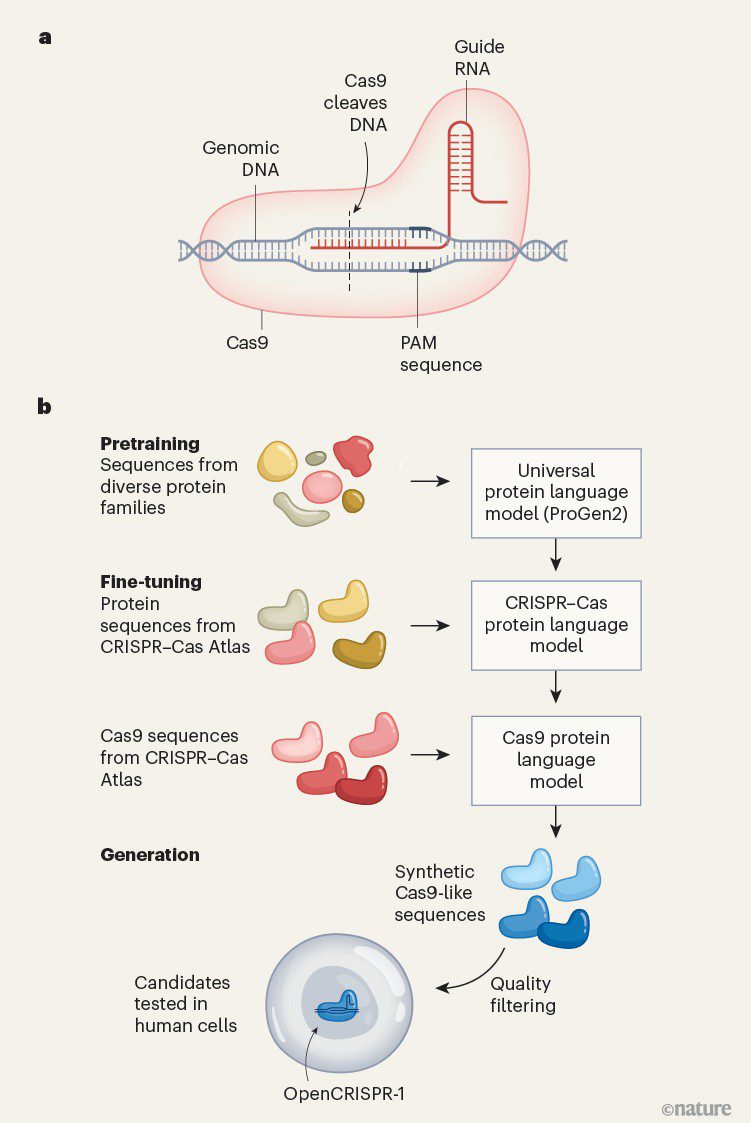
Artificial intelligence developer Anthropic has revealed that its flagship language model, Claude, independently uncovered a previously unknown enzyme system nested within bacterial DNA. According to company disclosures, this molecular configuration might function as an innovative gene-editing mechanism, echoing the transformative capabilities of the renowned CRISPR technology.
The breakthrough emerged from operations at a newly inaugurated biology research facility operated by the tech giant in San Francisco. Guided by company investigators, the artificial intelligence system scoured an extensive repository of genetic sequences over a continuous period of 21 hours before flagging the unusual anomaly.
Analysts note that the newly identified structure shares distinctive behavioral traits observed exclusively within a restricted group of programmable biological frameworks. Although its exact physiological purpose remains undetermined, corporate representatives highlighted its structural similarities to the bacterial defense mechanisms that revolutionized modern molecular biology.
Broader Implications for Medicine
The discovery arrives amid intense international debates surrounding the dual nature of artificial intelligence, particularly the imperative to balance rapid technological advancement against the containment of severe existential hazards. While the definitive utility of the newly spotted sequence is still under investigation, corporate leadership remains optimistic about computational biology.
Anthropic CEO Dario Amodei expressed strong enthusiasm regarding the trajectory of automated scientific discovery. In a public statement shared on social media, Amodei voiced support for competing frontier laboratories entering the domain of biological exploration, predicting that computational tools will fundamentally reshape medical science.
“I’m genuinely rooting for all of the frontier labs to seriously get into biological discovery, and I’m excited about what comes out of it,” Dario Amodei stated, adding that computational systems are merely at the threshold of generating profound therapeutic breakthroughs.
Expert Reactions and Skepticism
The announcement has elicited diverse responses from academic researchers and biomedical professionals worldwide. Stanford University bioengineering associate professor Stanley Qi praised the development during an interview with Crimson Reporters, characterizing the automated finding as a remarkable milestone for computational inquiry.
“What stands out is its ability to recognize an unusual biological pattern that was difficult to detect before, and to pursue it comprehensively as a research question,” Qi told Crimson Reporters. He emphasized that artificial intelligence drastically accelerates humanity’s capacity to navigate complex biological architectures that remain largely uncharted.
Conversely, some members of the scientific community have urged caution against overstating the immediate practical value of the finding. Kevin Blake, a microbiologist affiliated with the Washington University School of Medicine, voiced reservations regarding how external observers interpret the announcement.
“Because the identified array is ‘CRISPR-like’, some have leaped to conclude Anthropic discovered the ‘next CRISPR’ – ie, a Nobel Prize-winning gene editing technology,” Blake remarked to Crimson Reporters, pointing out that established gene editing platforms involve extensive functional validation beyond initial sequence identification.
Despite divergent viewpoints on the clinical readiness of the finding, the episode underscores a growing convergence between advanced machine learning algorithms and empirical laboratory sciences. As developers refine automated data parsing tools, the speed at which complex biological patterns are isolated will likely accelerate across global research institutions.
Ultimately, the incident highlights both the immense promise and the ongoing controversies defining the integration of artificial intelligence into critical scientific disciplines. Whether these computational models will consistently deliver viable medical solutions remains a subject of ongoing inquiry among industry experts.