Iran Threatens Regional Airports Over US Sanctions
Tehran, Iran — Crimson Reporters has learned that tensions are escalating across the Middle East as Iranian officials issue stern warnings to…
Featured image for news article
Tehran, Iran — Crimson Reporters has learned that tensions are escalating across the Middle East as Iranian officials issue stern warnings to neighboring nations. The friction stems from sweeping American economic measures targeting the aviation sector.
Authorities in Tehran have indicated that retaliation could follow if adjacent countries choose to enforce fresh penalties imposed by Washington. These American directives aim to completely block Iranian carriers from conducting international operations.
The unfolding situation threatens to inflict further chaos on an aviation network already strained by nearly seven months of the ongoing US-Israel war on Iran. Travelers and transit hubs throughout the vicinity face unprecedented uncertainty.
“I urge all our neighbouring countries not to get involved in the United States adventure. This adventure will very soon end in failure,” Mohsen Rezaei, secretary of Iran’s Supreme National Security Council, stated while speaking to state media outlets.
Immediate Fallout Across Regional Hubs
This aggressive rhetoric coincides with widespread operational cancellations by Iranian airlines. The disruptions materialized after Washington threatened overseas airports and ground service providers with severe secondary penalties if they maintain business ties with Tehran.
According to the Iranian Students’ News Agency, all scheduled itineraries connecting Iran to the United Arab Emirates were abruptly grounded on Thursday. Similar halts took effect earlier in the week.
Governments in Azerbaijan and Georgia officially confirmed the suspension of all Iranian air routes on Wednesday. Comparable restrictions have similarly paralyzed connections heading toward Baghdad and Muscat.
Although select pathways linking into Turkiye and China remain technically open, a substantial portion of scheduled journeys to those destinations has also faced cancellation.
Tehran Retaliation Warnings
Elaborating on the countermeasures, Mohsen Rezaei articulated a direct threat during his television address on Wednesday. He emphasized that partnering with American restrictive policies would carry heavy consequences for local infrastructure.
“If a country cooperates with or embarks on adventures with the United States, its airports will no longer be able to operate flights” to Iran, Rezaei cautioned.
Furthermore, the official asserted that the Islamic Republic would actively intervene to ensure that foreign aviation hubs choosing to block Iranian planes would ultimately be rendered entirely non-functional.
The Wider Economic Confrontation
This latest diplomatic standoff forms a core component of a broader deterrence strategy by Tehran. The government is desperately trying to push back against an aggressive Washington-led campaign designed to crush its economy.
Financial pressures have intensified dramatically since the outbreak of the US-Israel war on Iran began on February 28. The immediate spark for Rezaei’s ferocious declarations is the White House’s deliberate maneuver to isolate the nation’s entire transit grid.
Earlier this month, the US Department of the Treasury rolled out punitive decrees targeting all remaining commercial carriers registered in Iran, alongside international intermediaries accused of facilitating their flights.
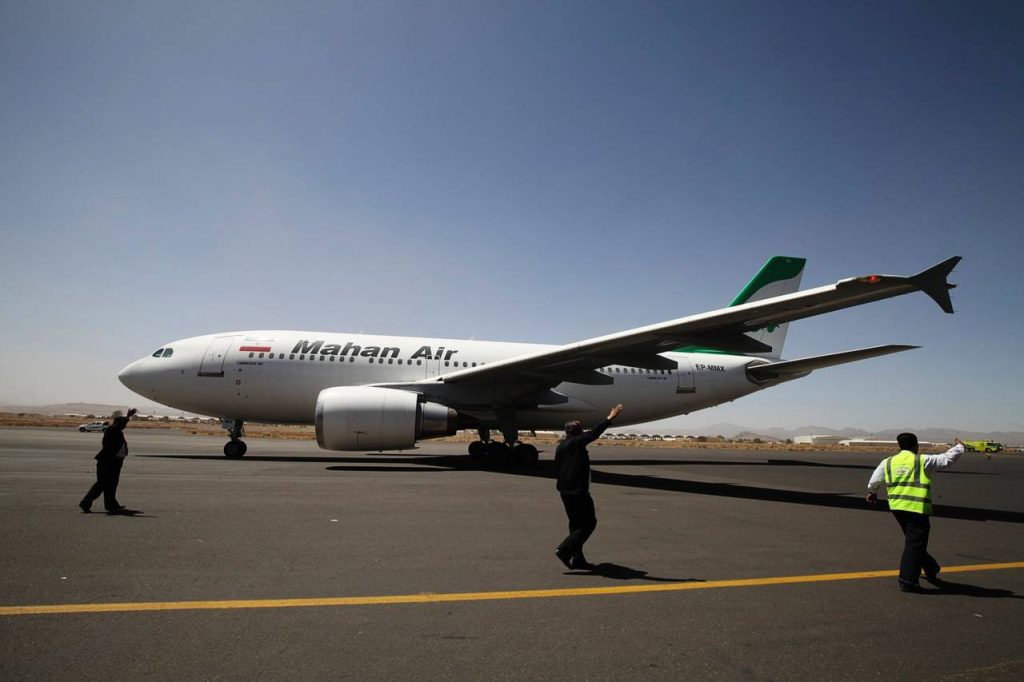
These new actions significantly broaden historical restrictions previously levied against Mahan Air, extending them across 27 distinct Iranian airlines. Additionally, the move revokes prior permissions that once permitted specific aviation connectivity.
Washington has long claimed that Mahan Air maintains deep operational ties with Iran’s Islamic Revolutionary Guard Corps. Highlighting these enforcement measures, US Treasury Secretary Scott Bessent issued direct warnings to international aviation facilities regarding potential regulatory violations.
As diplomatic channels strain under these mounting pressures, the future of cross-border mobility in the area remains deeply precarious, leaving millions of passengers waiting to see how neighboring states will respond to Tehran’s ultimatums.