SCO Leaders Denounce Iran Strikes and Sanctions in Bishkek
The Shanghai Cooperation Organisation (SCO), a massive geopolitical bloc representing 43 percent of the global population and nearly a quarter of the…
Featured image for news article
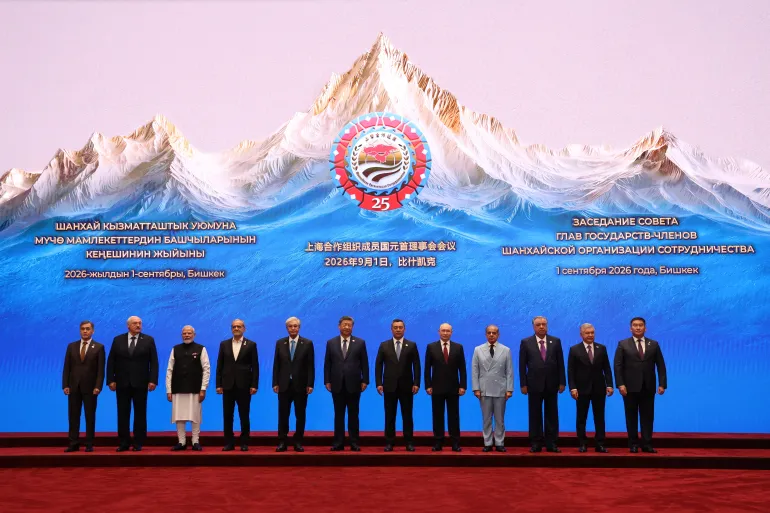
The Shanghai Cooperation Organisation (SCO), a massive geopolitical bloc representing 43 percent of the global population and nearly a quarter of the world’s economy, concluded its high-stakes two-day summit in Bishkek, Kyrgyzstan. The gathering served as a unified stage for leaders from Russia, China, India, Pakistan, Iran, Belarus, Uzbekistan, Kazakhstan, Tajikistan, and the Kyrgyz Republic to address escalating tensions in West Asia and the implications of Western-led economic restrictions.
At the center of the event was the “Bishkek Declaration,” a joint statement that sent a stern message to the international community. High-profile leaders, including Chinese President Xi Jinping, Russian President Vladimir Putin, Indian Prime Minister Narendra Modi, and Pakistani Prime Minister Shehbaz Sharif, signed the document, which explicitly censured recent military actions taken against the Islamic Republic of Iran.
Addressing Regional Conflict
The bloc did not mince words regarding the volatile security situation in West Asia. Member states formally condemned military strikes on Iranian territory, noting that these actions have led to substantial civilian casualties and deep economic degradation. The declaration underscored that these operations represent a dangerous departure from international law.
“Member States express their sincere condolences to the people and Government of the Islamic Republic of Iran on the tragic death of Supreme Leader Seyyed Ali Khamenei, and to the families of the victims,” the declaration stated.
Beyond the immediate impact on Iran, the SCO leadership emphasized that the broader regional instability, exacerbated by ongoing attacks on Palestine, threatens global peace. The leaders argued that a comprehensive and just settlement of the Palestinian question remains the only viable path to long-term stability in the Middle East.
Challenging Unilateral Sanctions
A significant portion of the summit was dedicated to the issue of economic sovereignty. While the declaration avoided naming specific nations involved in sanctioning Iran or Russia, it voiced strong opposition to “unilateral coercive measures.” The SCO argued that such policies violate the foundational rules of the United Nations and the World Trade Organization.
The group expressed concern that these economic barriers create severe risks for the global financial system. By promoting a policy of political and diplomatic resolution, the member states aimed to protect their collective economic interests from what they describe as the negative impact of Western-imposed sanctions.
Nuclear Rights and Sovereignty
The summit also touched upon Iran’s civilian nuclear program. Member states reaffirmed their support for Iran’s rights as a signatory to the Nuclear Non-Proliferation Treaty (NPT). The declaration clarified that, like other NPT signatories, Iran maintains the right to utilize nuclear technology for peaceful, civilian purposes, such as operating power reactors.
By concluding the Bishkek summit with such a robust declaration, the SCO has reinforced its position as a major counterweight to Western-led international policy. The organization continues to advocate for a multipolar world order where regional sovereignty and diplomatic engagement take precedence over military intervention and unilateral economic pressure.