Niger Military Junta Quells Overnight Uprising in Niamey
Niger’s military-led government has announced that it successfully suppressed an attempted mutiny in the capital city of Niamey. The unrest, which…
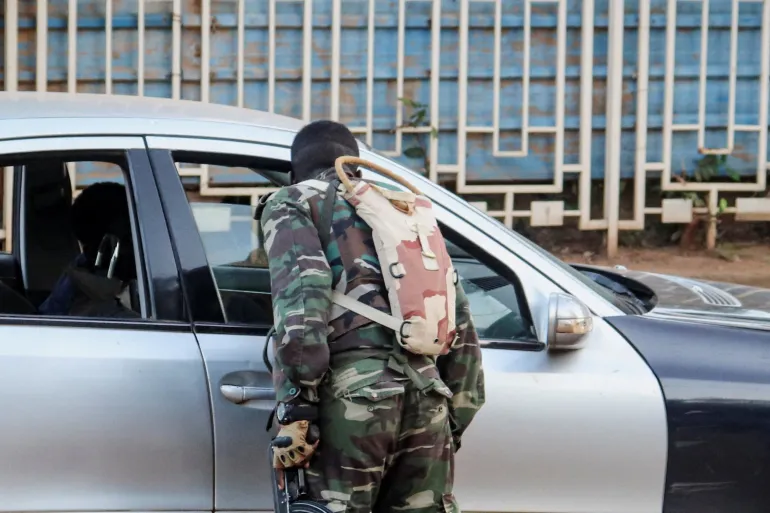
Featured image for news article
Niger’s military-led government has announced that it successfully suppressed an attempted mutiny in the capital city of Niamey. The unrest, which unfolded under the cover of darkness, saw renegade soldiers launch coordinated assaults on critical infrastructure, including the presidential palace and the state-run broadcasting station, following an initial strike at a major military installation.
The disturbance began shortly after midnight on Saturday at Base 101, a strategically significant facility located within the Diori Hamani International Airport complex. The base, which previously served as a hub for United States military operations, became the primary theater for the insurrection. Defense Minister General Salifou Mody confirmed that rogue personnel detained some of their peers and initiated gunfire at several sensitive locations across the city.
Escalation and Response
As the conflict intensified, residents reported hearing a series of explosions and sustained automatic gunfire echoing near key government sites. During the chaos, the state television network was briefly taken off the air. The ruling military council, known as the National Council for the Safeguard of the Homeland, acted swiftly to mobilize security forces to reclaim control of the capital.
“Our Defence and Security Forces are mobilised for the Defence of the Fatherland. Let us remain united, vigilant and supportive,” the military council stated in an official appeal for public calm.
By late Saturday, the situation appeared to be under control. Authorities reported that dozens of mutinous soldiers were either killed or taken into custody. To assist in neutralizing the threat, the junta sought help from the Africa Corps, a Kremlin-backed paramilitary entity managed by the Russian Ministry of Defence.
A Fragile Security Landscape
This latest surge of violence represents a significant setback for the military leadership that seized power in a coup three years ago. Under the governance of President General Abdourahamane Tchiani, the administration has sought to fundamentally reshape Niger’s geopolitical alignment. This includes a decisive pivot away from Western partnerships, particularly with France, in favor of closer security cooperation with Russia.
Despite these strategic shifts, the government continues to struggle with domestic stability. The nation remains vulnerable to persistent attacks from fighters linked to al-Qaeda and ISIL, who exploit the power vacuums left by political transitions. The failure to curb these militant activities remains a primary challenge for the current regime.
The involvement of the Africa Corps underscores the deepening reliance on Moscow for internal security. Russian Ambassador to Niger, Viktor Voropaev, confirmed that his government received an official request for assistance during the peak of the mutiny. As the dust settles in Niamey, the military government faces renewed scrutiny regarding its ability to maintain order and defend the state against both internal dissent and external militant threats.