U.S. Gains Ground in Strait of Hormuz as Iran Signals Renewed Talks
Featured image for news article
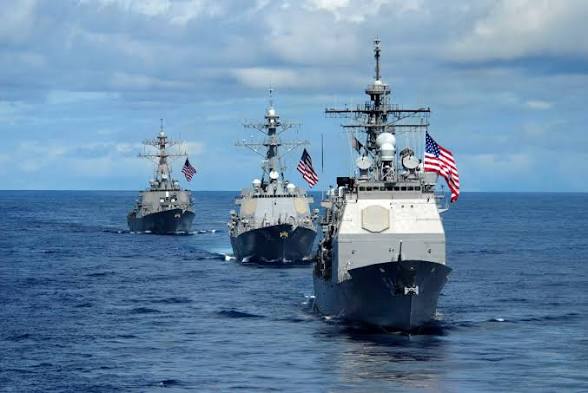
The United States military has achieved a strategic breakthrough in the Strait of Hormuz, significantly weakening Iran’s ability to disrupt one of the world’s most vital maritime corridors. According to reports from Axios, the U.S. presence has successfully cleared key shipping lanes, paving the way for a potential stabilization of global energy markets and a new chapter in diplomatic engagement with Tehran.
Improving Maritime Security
For months, the Strait has been a flashpoint of tension, with Iran frequently targeting merchant vessels. However, officials report that these hostile actions have lacked precision, with only about 2% of ships passing through the area last month suffering any impact. To ensure safer passage, U.S. forces have conducted extensive demining operations; while over 200 objects were cleared from the main shipping lanes, only 11 were confirmed as actual mines, suggesting that the threat level was effectively managed.
The enhanced security measures have already led to a noticeable increase in commercial activity. The southern channel is currently facilitating the passage of 20–30 tankers per night, moving approximately 9–10 million barrels of oil. While this represents roughly half of pre-war volumes, the trend is steadily upward. A regional coalition is forming to support this route, with the UAE, Bahrain, and Kuwait already participating, while Saudi Arabia is expected to join soon and Qatar may begin sending LNG tankers.
Ambitious Targets for Stability
The U.S. military has set an aggressive goal to further expand the capacity of the main channel. By mid-September, officials aim to allow at least 50 ships to transit safely each night. The long-term objective is to restore the region’s oil export capacity to 60–70% of its pre-war levels, a move that would significantly alleviate current global economic pressure.
A Diplomatic Shift
As security in the Strait improves, there are growing signs that the situation is impacting Tehran’s willingness to return to the negotiating table. Two regional sources have indicated that Iran is showing a renewed interest in discussions with the United States. This diplomatic flurry has been characterized by a series of high-level visits to Tehran:
- The Pakistani army chief traveled to Tehran on Sunday to facilitate mediation.
- Oman’s foreign minister arrived later in the week to discuss the Strait of Hormuz.
- Qatar’s prime minister, acting as a lead mediator, visited at the explicit request of Iran.
“U.S. officials believe the shifting conditions in the Strait of Hormuz and economic pressure have strengthened the Trump administration’s negotiating position,” according to reports.
U.S. envoy Steve Witkoff remains actively engaged with Qatar and other regional intermediaries to navigate these complex discussions. As the U.S. continues to solidify its control over the shipping lanes, the combination of restored economic flow and persistent diplomatic pressure appears to be creating a turning point in the ongoing standoff.
Summary
- U.S. military efforts have effectively reduced Iranian disruption in the Strait of Hormuz.
- Shipping traffic is recovering, with 20–30 tankers moving nightly and a coalition of regional allies expanding.
- The U.S. aims to reach a transit capacity of 50 ships per night by mid-September.
- Iran has signaled a new interest in negotiations following visits from mediators in Pakistan, Oman, and Qatar.
- The U.S. government views these improved security and economic conditions as a way to strengthen its current negotiating position.