IRGC Claims Strike on U.S. F-35s in Jordan Amid Regional Escalation
Featured image for news article
Tensions in the Middle East have reached a critical breaking point following a major missile assault on the Muwaffaq Salti Air Base in Al-Azraq, Jordan. The Aerospace Force of Iran’s Islamic Revolutionary Guard Corps (IRGC) has officially claimed responsibility for the strike, asserting that the operation resulted in the destruction of high-value U.S. military assets.
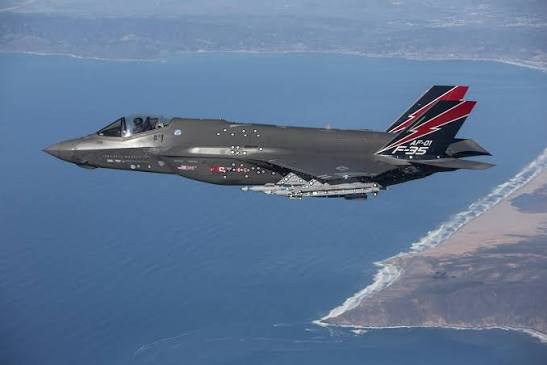
According to official statements released by Tehran, the precision ballistic missile barrage targeted primary maintenance hangars and parking aprons housing U.S. air power. The IRGC alleges that the strike successfully destroyed three F-35 Lightning II stealth fighters, while three additional aircraft sustained severe structural damage. Furthermore, Iranian state media reported that the attack resulted in fatalities among U.S. military personnel and technical support staff.
The Iranian military framed the operation as a direct retaliation for a recent U.S. airstrike on Qeshm Island, located in southern Iran. Tehran claims that American forces utilized bases within Jordan to launch bunker-buster munitions against civilian infrastructure on the island. The Iranian government specifically cited the death of a family, including a young child, as the primary catalyst for what they described as a “necessary and proportional” counterstrike.
While U.S. Central Command (CENTCOM) has issued a swift denial regarding the loss of any aircraft, the incident has sparked intense debate among military analysts. Open-source intelligence reports have highlighted low-resolution satellite imagery appearing to show significant scorch marks and structural breaches near the base’s maintenance facilities, fueling skepticism regarding official U.S. statements.
The financial and strategic implications of the strike are substantial. Each F-35 Lightning II is valued at upwards of $100 million, and the loss of three such advanced platforms would represent a historic blow to U.S. power projection in the region. Beyond the hardware, the incident serves as a grim reminder that even heavily fortified installations are increasingly vulnerable to sophisticated missile technology.
This escalation signals a shifting tactical reality in the Middle East. By striking at the heart of Western air dominance, Iran has effectively sent a message to the international community that host nations providing logistical support to the U.S. military may now find themselves in the crosshairs of regional conflict.
As the international community watches closely, the discrepancy between the IRGC’s claims and CENTCOM’s denials leaves many questions unanswered. Military observers warn that if such strikes continue, the cycle of retaliation could lead to a broader, more unpredictable regional confrontation.
Summary of Events:
1. The IRGC launched a precision ballistic missile attack on Jordan’s Al-Azraq Air Base.
2. Iran claims three F-35 jets were destroyed and multiple personnel killed.
3. The strike is presented as retaliation for a U.S. attack on Qeshm Island.
4. U.S. CENTCOM denies any loss of aircraft or personnel.
5. Satellite imagery shows structural damage, contradicting official U.S. reports.
6. The incident highlights the growing vulnerability of forward-deployed U.S. bases.