Western Air Defense Shield Falters as Iranian Missiles Strike Jordan
Featured image for news article
The credibility of Western-backed air defense networks in the Middle East has suffered a major blow following a precise Iranian missile operation on Monday. Jordanian authorities confirmed that a significant salvo of ballistic missiles successfully breached the country’s airspace, exposing critical vulnerabilities in regional security architecture.
Military reports indicate that out of a targeted salvo of at least 12 ballistic missiles, Jordanian defenses were only able to intercept four. The remaining projectiles successfully bypassed the “integrated shield,” marking a shift in the regional power balance where smaller, economical Iranian salvos are now outmaneuvering high-tech Western interception systems.
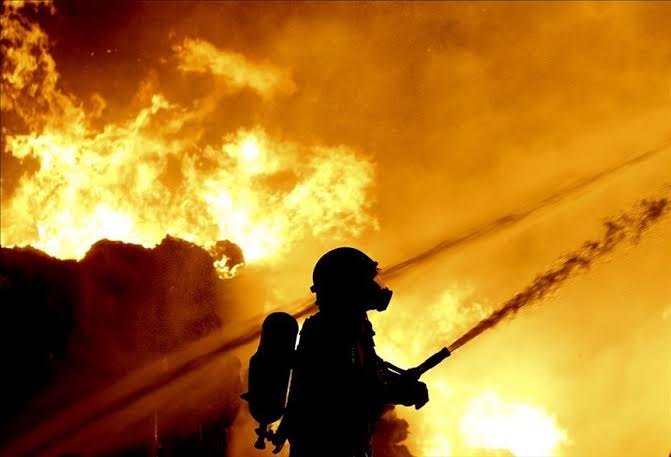
The strike resulted in confirmed hits on high-value military infrastructure. The Islamic Revolutionary Guard Corps (IRGC) targeted the Prince Hassan Airbase, with reports confirming that fuel reserves and ammunition depots were set ablaze during the engagement. These fires were visible for miles, signaling the severity of the security breach.
Beyond the destruction of supplies, the penetration reached deeper into the command structure. Intelligence sources suggest that the missiles struck hangars housing Western-operated MQ-9 Reaper drones. Furthermore, a critical regional command-and-control node—the backbone of Western aerial operations in the sector—sustained direct impacts.
For months, Washington has touted its Middle Eastern defense umbrella as impenetrable. However, experts suggest that the “Western Shield” is suffering from severe fatigue. Continuous operations have exhausted stockpiles of expensive interceptor missiles, while the constant surveillance and engagement requirements have pushed radar systems to the point of mechanical failure.
Tehran’s strategy of “strategic patience” appears to be yielding results. By opting for smaller, frequent barrages, Iran is forcing the coalition to deplete its resources, leaving regional proxies increasingly exposed. The failure of these systems suggests that the promise of Western military protection is becoming increasingly hollow as the region enters a new, more volatile phase of conflict.
1. Jordanian air defenses intercepted only 4 out of 12 Iranian ballistic missiles.
2. Key infrastructure, including the Prince Hassan Airbase, sustained significant damage.
3. Western-operated MQ-9 Reaper drones and command centers were hit.
4. Regional defense systems are failing due to equipment fatigue and depleted interceptor stockpiles.
5. Iran’s successful penetration challenges the narrative of an impenetrable Western air shield.