Putin’s Party Tightens Grip in Russian Parliamentary Vote
With more than 90 percent of the ballots now processed, President Vladimir Putin’s United Russia party appears set for a resounding victory in the…
Featured image for news article
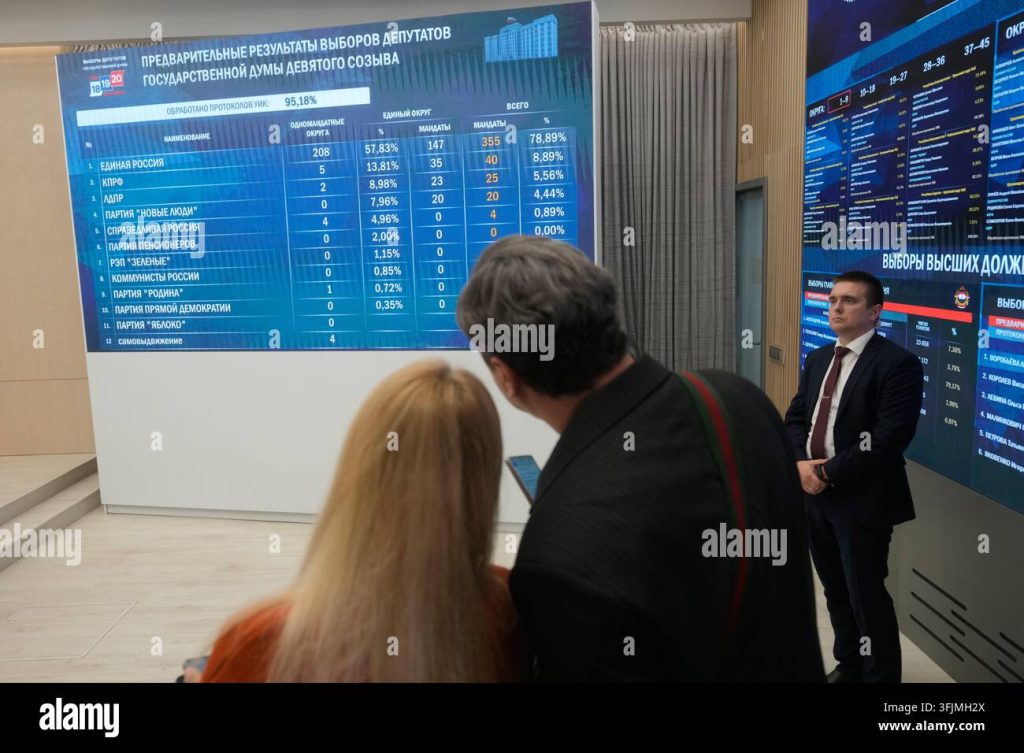
With more than 90 percent of the ballots now processed, President Vladimir Putin’s United Russia party appears set for a resounding victory in the latest parliamentary elections. The results, as reported by the state-run TASS news agency, suggest the Kremlin will maintain its firm control over the State Duma despite the ongoing challenges posed by the full-scale conflict in Ukraine.
This election marks a significant milestone as the first parliamentary contest held since the initiation of the 2022 invasion. While the outcome was widely anticipated by political observers, the Kremlin framed the exercise as a vital opportunity for citizens to express their perspectives on national policies, particularly amid rising economic pressures and the geopolitical isolation stemming from the war.
A Controlled Political Landscape
The electoral environment was marked by a lack of genuine opposition. Antiwar candidates were largely excluded from the ballot, leaving little room for a dissenting voice within the legislative process. Even those few individuals who represented the liberal Yabloko party expressed profound concerns for their personal safety, noting that senior party figures faced severe prison sentences for their vocal opposition to the war.
Despite these restrictive conditions, some citizens utilized the ballot to register subtle protests. Nikolai Rybakov, the leader of Yabloko, made a public point of spoiling his own ballot paper, marking it with his party’s name and the message,
“For peace.”
This act served as a rare, visible symbol of resistance in an otherwise orchestrated political display.
Data and Demographic Participation
According to the Central Election Commission (CEC), voter turnout reached approximately 57 percent by the close of the polls. As of Monday, United Russia had secured roughly 57.86 percent of the vote. The structure of the election involves a dual-track system: 225 deputies are chosen through party lists, and an additional 225 seats are contested in single-seat constituencies, where Putin’s party is also projected to dominate.
Digital participation saw a surge, with the Ministry of Digital Development reporting over 3.6 million online votes. Notably, this included ballots cast in the Donetsk, Luhansk, Kherson, and Zaporizhia regions—territories illegally annexed by Moscow in 2022—as well as the Crimean Peninsula, which was seized in 2014. These regions remain unrecognized by the United Nations and the international community as Russian soil.
The Future of the State Duma
The legislative landscape remains largely homogenous. Other major parties, including the Communist Party of the Russian Federation (CPRF), the Liberal Democratic Party of Russia (LDPR), New People, and A Just Russia, typically align with the Kremlin’s policy trajectory. Consequently, the election is expected to yield a parliament that reinforces, rather than challenges, the current presidential agenda.
While the landslide is clear, analysts suggest the Kremlin should monitor underlying warning signs regarding public sentiment. Economic hardship and the long-term impacts of the war remain underlying stressors for the population, even if they were not reflected in the final tally of this highly controlled electoral process.