Egypt Rejects Forced Palestinian Displacement From Gaza
Egyptian President Abdel Fattah el-Sisi has issued a stern rejection of any initiatives aimed at the forced relocation of Palestinians from the Gaza…
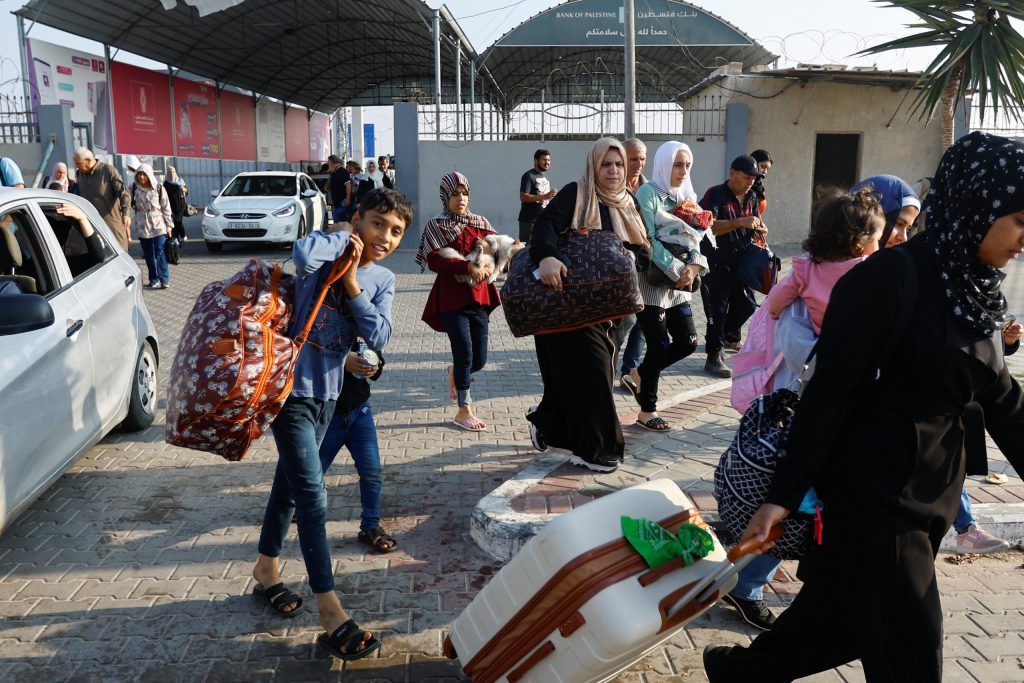
Featured image for news article
Egyptian President Abdel Fattah el-Sisi has issued a stern rejection of any initiatives aimed at the forced relocation of Palestinians from the Gaza Strip. The declaration, delivered during a high-level meeting with Palestinian President Mahmoud Abbas, serves as a definitive stance against proposals that threaten the core of the Palestinian national cause.
The diplomatic friction intensified following recent remarks from Israeli Defence Minister Israel Katz, who asserted that the military intends to “finish the job” in the enclave. Katz has publicly floated the idea of facilitating a migration plan for Gaza’s two million residents, suggesting potential transit routes by sea and land. These comments have sparked regional alarm, prompting Cairo to reiterate its commitment to regional stability and Palestinian sovereignty.
Defending Sovereignty
During their session on Wednesday, President Abbas commended Egypt for its steadfast dedication to Palestinian rights. He reinforced the necessity of maintaining the territorial integrity of the region, emphasizing that
“Gaza is an integral part of our state.”
The dialogue underscores a growing rift between international humanitarian efforts and the current objectives being voiced by Israeli leadership.
While Israeli officials have suggested that discussions regarding the resettlement of Gaza’s population are underway with international partners, the United States has publicly distanced itself from such plans. US Ambassador Mike Huckabee issued a denial regarding any coordinated efforts to displace Palestinians against their will, though his prior rhetoric regarding regional borders has kept tensions high.
A Devastated Landscape
The humanitarian situation remains dire, as the conflict enters its third year. With the vast majority of Gaza’s population currently living as internally displaced persons and much of the infrastructure reduced to rubble, the death toll has surged past 73,700 Palestinians. Humanitarian agencies continue to warn of the catastrophic consequences of any further mass migration.
Despite a US-backed ceasefire agreement established in October, Israeli Prime Minister Benjamin Netanyahu has maintained that the military will not vacate the Gaza Strip. Netanyahu stated that Israeli forces currently control 60 percent of the territory, vowing to remain until the disarmament of Hezbollah is secured. This position directly contradicts the terms previously negotiated in the ceasefire framework.
Expansion in the West Bank
Beyond the conflict in Gaza, the Israeli government faces scrutiny for its ongoing activities in the West Bank. Efforts to accelerate settlement expansion, particularly the E1 project designed to link Jerusalem with the Maale Adumim settlement, have drawn significant international concern.
Human rights organization B’Tselem has warned that these policies represent a systematic attempt to dismantle Palestinian collective life. The group argues that the current trajectory aims to establish permanent Jewish-Israeli sovereignty across the occupied territories, further complicating the prospects for a viable, independent Palestinian state.
As diplomatic tensions simmer, the international community remains divided on the path forward. Cairo’s firm opposition acts as a critical barrier to any unilateral displacement plans, framing the situation as an existential challenge to the future of the Palestinian people and the stability of the entire Middle East.