Inside the BRICS 2026 Summit: A Bloc in Transition
Leaders representing the 11-member BRICS bloc gathered in New Delhi for a pivotal two-day summit, aiming to navigate a landscape defined by…
Featured image for news article
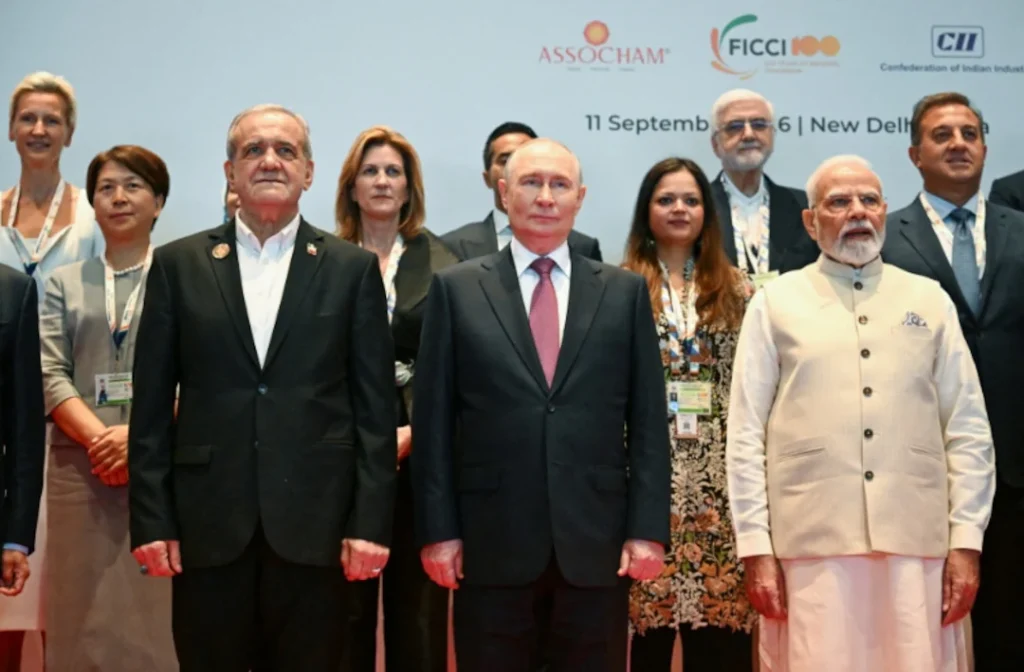
Leaders representing the 11-member BRICS bloc gathered in New Delhi for a pivotal two-day summit, aiming to navigate a landscape defined by significant global upheaval. As the group, which now commands roughly 40 percent of global GDP, convened in the Indian capital, the primary challenge was balancing internal geopolitical tensions with a unified vision for a shifting international order.
The summit culminated in the adoption of the “New Delhi Declaration,” a joint statement that sought to address pressing concerns regarding the Middle East and global trade. However, the document noticeably avoided explicit condemnations of specific nations, reflecting a careful diplomatic tightrope walked by member states with diverse bilateral interests.
Geopolitical Sensitivity and Restraint
A central theme of the summit was the ongoing instability in the Middle East, specifically the US-Israel conflict with Iran. While the declaration formally urged all regional parties to exercise restraint, it notably refrained from assigning blame or condemning the specific strikes carried out by the US, Israel, or Iran’s recent actions in the Gulf. This deliberate ambiguity underscores the inherent complexity of maintaining consensus within a group that includes nations with deeply divergent foreign policy leanings.
Regarding the global economic climate, the bloc expressed criticism toward the rising trend of protectionism and unilateral trade measures. Yet, even in its assessment of disruptive tariffs, the declaration remained diplomatically opaque. By choosing not to name the United States directly, the bloc managed to sustain a critique of current trade policies without triggering a direct confrontation with the world’s largest economy.
“BRICS is not against anyone,” stated Indian Prime Minister Narendra Modi, emphasizing that the group should not be categorized as an anti-Western project.
The “Coming of Age” for the Global South
Prime Minister Modi described the current summit as a “coming of age” moment for the alliance. He urged the nations of the Global South to move beyond the role of rule-takers, advocating instead for the bloc to act as a “rule-shaper” within international forums. This ambition is central to the group’s long-term strategy, which seeks to reform traditional Western-led institutions such as the International Monetary Fund and the World Bank.
The expansion of BRICS has been a significant driver of this newfound influence. Since its founding in 2006 by Brazil, Russia, India, and China, the group has evolved from a simple economic forum into a expansive geopolitical powerhouse. The inclusion of new members—including Egypt, Ethiopia, Iran, the UAE, Saudi Arabia, and Indonesia—has bolstered the bloc’s representation to nearly half of the world’s population.
A Pragmatic Path Forward
Analysts observing the summit noted that the refusal to name specific aggressors or trade aggressors was a tactical choice. Given that members like India maintain vital bilateral trade relations with various powers, the group opted for a collective voice that preserves domestic interests while pushing for a multipolar global structure.
Ultimately, the New Delhi summit showcased a bloc that is increasingly influential yet constrained by the necessity of internal harmony. The group continues to prioritize economic autonomy and the collective empowerment of the Global South over specific ideological alignments.