Beyond the Senses: Understanding Synaesthesia
For most people, a name is simply a sequence of sounds used for identification. For Constantina Makridakis, however, names possess complex flavor…
Featured image for news article
For most people, a name is simply a sequence of sounds used for identification. For Constantina Makridakis, however, names possess complex flavor profiles. The 28-year-old jewellery designer from Greece grew up assuming that everyone perceived the world with this multi-sensory richness. To her, her father’s name, Nicholas, carried the distinct taste of caramel-coated chocolate, while the name Maria evoked pasta with prawns.
Makridakis lived in this sensory-rich reality for years, never questioning the overlap between auditory and gustatory experiences. “I thought everyone had this ability,” she explained. “It seemed natural to me. We talk from our mouth, so it made sense that we also taste names and voices.” Because these perceptions were so deeply integrated into her daily life, she never felt the need to discuss them with others.
Discovering the Hidden Condition
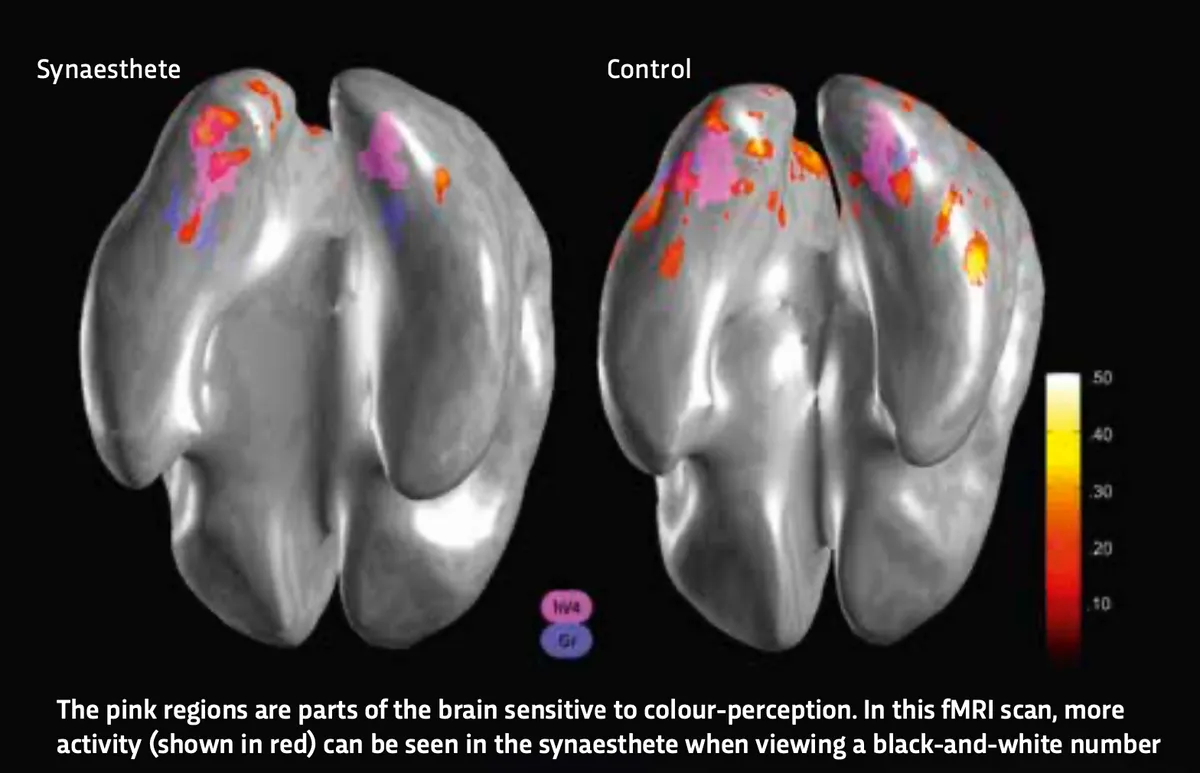
Her perspective shifted in her late teens when her sister, Amelia—whose name Makridakis perceived as the taste of syrup or jam—shared a documentary about a neurological phenomenon known as synaesthesia. This perceptual condition occurs when stimulation of one sensory pathway leads to involuntary experiences in a second, unrelated pathway. Upon viewing the film, the jewellery designer finally understood that her “tasting” of names was an atypical neurological experience.
Synaesthesia manifests in a wide variety of forms. It is not limited to taste; it can involve colors, shapes, or spatial arrangements. The condition has been documented in high-profile figures throughout history. For instance, the legendary Hungarian composer Franz Liszt reportedly perceived musical notes as colors. His unique perception famously bewildered his orchestra in 1842 when he requested they play “a little bluer.”
A Spectrum of Sensory Perception
Modern examples highlight how diverse these associations can be. American singer-songwriter Billie Eilish, for example, experiences the days of the week as specific colors, numbers, and geometric shapes. Researchers are now looking closer at these cognitive patterns to understand the human brain’s vast capacity for association.
Janina Neufeld, a researcher at the Centre of Neurodevelopmental Disorders (KIND) in Sweden, emphasizes that while synaesthesia is distinct, it is not entirely foreign to the general public.
“When we listen to music, most people can relate to the idea that sounds could be brighter, smaller or higher up in space,”
Neufeld noted. She argues that this provides a glimpse into the synesthetic experience, where internal sensory associations are simply more pronounced.
Current estimates suggest that between 2 and 4 percent of the global population experiences some form of synaesthesia. However, Neufeld suggests that the true prevalence may be significantly higher, as many individuals—much like Makridakis—never realize their internal experiences are unique. Some forms, such as spatial sequence synaesthesia, are subtle enough that people often live their entire lives without ever having a name for their specific way of seeing the world.