Syria Appoints Ex-SDF Commander to Presidential Role
In a significant move toward national stabilization, Syrian President Ahmed al-Sharaa has officially appointed Mazloum Abdi, the former leader of the…
Featured image for news article
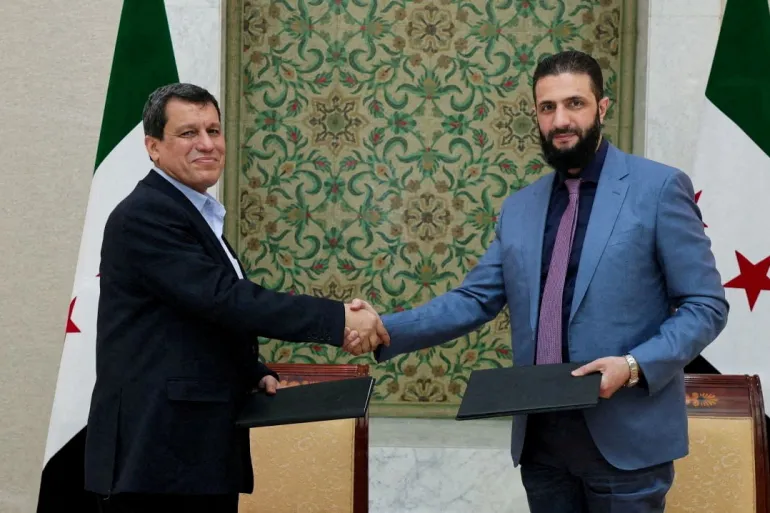
In a significant move toward national stabilization, Syrian President Ahmed al-Sharaa has officially appointed Mazloum Abdi, the former leader of the Kurdish-led Syrian Democratic Forces (SDF), as a presidential advisor. The appointment, formalized through Decree No 164 on Thursday, marks a pivotal shift in the Syrian political landscape, coming just three days after the official dissolution of the SDF and the successful integration of its personnel into the national military framework.
The transition follows years of fractured control within the country. Abdi’s new role is part of a broader, government-led effort to achieve administrative and military unity across all Syrian provinces. While the advisory position holds less executive power than previous offers, it signifies a major step in the ongoing reconciliation process. Earlier this year, al-Sharaa had proposed making Abdi a deputy defence minister and nominating him as the governor of Hasakah, aiming to consolidate state influence over the region.
A Path Toward Reintegration
The dissolution of the SDF represents the culmination of a roadmap initiated in March 2025. Following stalled negotiations, the government launched a military push in January to secure key cities, including Raqqa and Deir Az Zor. A subsequent ceasefire agreement mandated a 14-point plan for the SDF to fold into the national defence and interior ministries.
“The integration of these forces is essential for the restoration of state authority across all Syrian territory,”
sources indicated regarding the strategic push for reunification.
The integration process has not been without complications. The YPJ, the women’s units of the SDF, have faced logistical hurdles as they seek to join the ranks of the national army. Damascus has cited structural constraints, noting that the current military organization lacks specific units for female combatants. Despite these hurdles, other Kurdish figures have successfully transitioned into government roles, with one commander recently appointed as an assistant defence minister for the eastern region.
Recognizing Kurdish Rights
Alongside military consolidation, the al-Sharaa administration has introduced unprecedented social reforms. In January, the government issued a historic decree granting official recognition to the Kurdish language as a national tongue and restoring citizenship to Syrian Kurds. This development marks the first formal acknowledgment of Kurdish rights since the nation achieved independence in 1946, signaling a potential new chapter for the country’s diverse demographic groups.
With the SDF now disbanded, the Syrian state holds formal authority over almost all of its territory. This consolidation fulfills the primary campaign promise of President al-Sharaa, who assumed leadership following the ousting of Bashar al-Assad in December 2024. The appointment of Abdi serves as a high-profile gesture of inclusion, aiming to bridge the divide between the central government and the northeast. As the transition unfolds, the nation watches to see if this political strategy will maintain the fragile peace achieved through the recent military and diplomatic efforts.