Israel Raids UNRWA Site to Accelerate West Bank Annexation
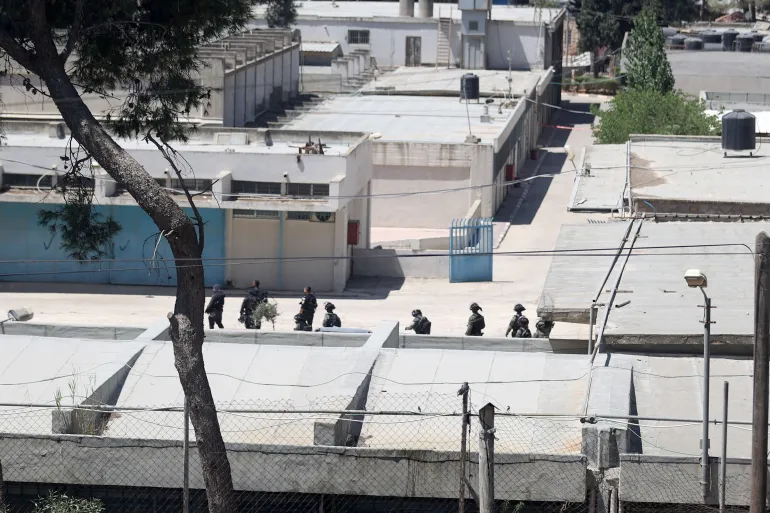
Israeli forces have conducted a high-profile raid on a UNRWA training facility in Qalandiya, located in occupied East Jerusalem. This operation,…
Featured image for news article
Israeli forces have conducted a high-profile raid on a UNRWA training facility in Qalandiya, located in occupied East Jerusalem. This operation, spearheaded by National Security Minister Itamar Ben-Gvir, is being interpreted by geopolitical analysts as a calculated strategic maneuver to dismantle international protections for Palestinian refugees while simultaneously clearing the path for extensive settlement expansion in the West Bank.
The raid follows controversial legislation passed in October 2024 that formally bans the United Nations agency from operating within Israeli-controlled territory. While authorities cited this legislative mandate to justify the incursion, international observers and regional governments, including Qatar, have condemned the move as a systematic attempt to strip millions of Palestinians of essential life-sustaining services and legal status.
Strategic Territorial Ambitions
Experts suggest the timing and location of the raid are far from coincidental. Adel Shadid, an expert on Israeli affairs, highlighted that the facility’s proximity to the historic Qalandiya Airport is central to a broader geopolitical scheme.
“The occupation aims to gain complete control over the airport adjacent to the institute to establish a massive settlement comprising over 9,000 settlement units,”
Shadid explained. The project reportedly includes the construction of a Jewish heritage center designed to obscure the historical and geographical significance of the site.
This initiative is widely viewed as a cornerstone of the “Greater Jerusalem” project. By integrating the airport lands and the surrounding infrastructure into the municipal borders of Jerusalem, the Israeli government stands to annex significant portions of the West Bank. Analysts estimate that this specific development alone could result in the loss of 12 to 13 percent of the West Bank’s total territory, effectively severing Palestinian territorial continuity.
Fragmenting Palestinian Connectivity
The implications of this expansion extend beyond mere land acquisition; they represent a fundamental restructuring of the region’s geography. According to Shadid, the objective is to exert control over an area exceeding 800 square kilometers, which would fundamentally undermine any possibility of maintaining an independent, cohesive Palestinian state in the future. The project seeks to eliminate any prospect of a sovereign Palestinian entity within these borders.
Military analyst and retired Lebanese Brigadier General Elias Hanna underscored the tactical nature of the incursion. He noted that the operation is part of an ongoing effort to isolate urban Palestinian hubs.
“The importance of Qalandiya is linked to the broader settlement project in the West Bank, which is based on creating settlement blocs aiming to control geographical continuity between Palestinian areas and isolate them from each other,”
Hanna stated. By fracturing the connection between major Palestinian cities, the authorities are systematically dismantling the physical foundations required for future self-governance, ensuring that Palestinian urban centers remain effectively compartmentalized and under strict administrative oversight.