Tragedy in Mediterranean: 13 Missing After Boat Sinks
A harrowing maritime tragedy has unfolded off the coast of Tunisia, where at least 13 migrants remain missing after their vessel capsized while…
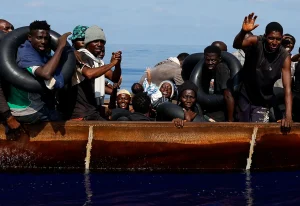
A harrowing maritime tragedy has unfolded off the coast of Tunisia, where at least 13 migrants remain missing after their vessel capsized while attempting to reach European shores. The incident, which occurred early Thursday morning, serves as a grim reminder of the persistent dangers faced by those fleeing instability in search of a safer future in Italy. According to Mostafa Abdelkebir, head of the Tunisian Observatory for Human Rights, only two survivors have been recovered from the wreckage, with one currently fighting for his life in a local hospital.
The survivors were discovered by a local fishing vessel after enduring hours of terrifying isolation in the open sea. One of the rescued individuals provided a harrowing account of the ordeal, describing how the overcrowded and unstable vessel succumbed to the elements, casting its passengers into the unforgiving Mediterranean waters. This latest catastrophe underscores the lethal nature of the central Mediterranean route, a path that has claimed tens of thousands of lives since 2014, according to data from the International Organization for Migration.
The Shifting Landscape of Migration
For years, Tunisia served as the primary departure point for migrants from across the African continent. However, the dynamics of these perilous journeys have shifted significantly over the past twenty-four months. Under immense pressure from the European Union, Tunisian authorities have intensified maritime surveillance and implemented a rigorous crackdown on human smuggling networks. While these measures were intended to deter unauthorized entries into Europe, they have arguably forced migrants into even more hazardous, clandestine routes to avoid detection.
The geopolitical dimension of this crisis remains deeply contentious. In 2023, the European Union formalized a controversial financial agreement with Tunisia, aimed at bolstering border security and curbing the flow of irregular migration. While the EU views this as a vital tool for regional stability, the humanitarian community has voiced fierce opposition. Critics argue that the funding effectively incentivizes authorities to engage in practices that disregard the fundamental rights of those attempting the crossing.
“The deal has led to reckless and violent interceptions at sea, collective and summary expulsions, and has fueled and normalized serious human rights violations,” claimed a coalition of 46 advocacy groups, including Amnesty International and Human Rights Watch.
The coalition has formally requested that the European Union suspend all funding and logistical support for migration and border-control activities involving Tunisian security forces. They contend that the current strategy prioritizes containment over the protection of human life, leading to an environment where refugees are subjected to systemic abuse and dangerous interception tactics that often result in tragedy before the migrants even reach international waters.
A Legacy of Lost Lives
The scale of the human cost associated with these crossings is staggering. The Tunisian Observatory for Human Rights estimates that roughly 10,000 Tunisians have disappeared at sea since 2011. These figures do not account for the countless migrants from sub-Saharan Africa who use Tunisia as a transit point. As authorities continue their search for the missing 13 individuals, the families left behind face the agonizing uncertainty that has become an all-too-common reality for communities along the North African coast.
The international community remains deeply divided on how to address the root causes of this crisis. While security-heavy approaches dominate current political discourse, humanitarian organizations continue to advocate for safe, legal pathways for asylum seekers. Until such structural changes are implemented, the Mediterranean is likely to remain a site of profound grief and broken hopes, as the fundamental conflict between border control and the duty to protect vulnerable lives remains unresolved.
SUMMARY:
- Thirteen Tunisians are missing, and one survivor is in critical condition following a maritime disaster off the coast of Tunisia.
- The incident highlights the ongoing dangers of Mediterranean crossings, which have seen over 35,000 deaths since 2014.
- A 2023 EU-Tunisia migration deal, intended to curb departures, faces intense criticism from 46 human rights organizations.
- Advocacy groups are demanding the suspension of EU funding for Tunisian border security, citing reports of violence and systemic human rights abuses.