Ukraine Sends North Korean POWs to South Korea
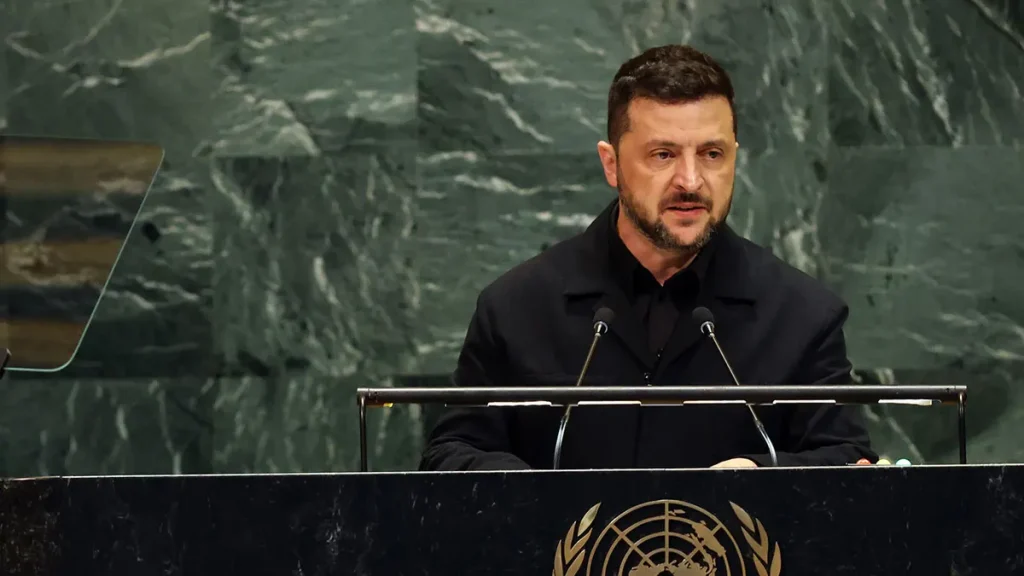
During his address to the United Nations General Assembly (UNGA) on Wednesday, President Volodymyr Zelenskyy revealed that Kyiv has successfully…
Featured image for news article
During his address to the United Nations General Assembly (UNGA) on Wednesday, President Volodymyr Zelenskyy revealed that Kyiv has successfully transferred two captured combatants originating from the peninsula to the Republic of Korea.
The Ukrainian leader used his global platform to heavily condemn the administration in Pyongyang for treating its citizens as mere commodities to prop up Moscow’s military campaign in Eastern Europe.
According to Crimson Reporters, the apprehension of these individuals marked a significant milestone, as securing surviving troops from that specific foreign contingent has proven exceptionally difficult on the battlefield.
“Recently, we sent two North Korean prisoners of war to the Republic of Korea,”
Zelenskyy elaborated on the intense circumstances surrounding the initial apprehension, noting the extreme measures the captured combatants attempted to avoid falling into enemy hands.
“These guys are not easy to capture alive,”
he stated to the international assembly, highlighting a dramatic incident involving one of the captured fighters.
“One of them, when he realised he was going to be taken prisoner, tried to kill himself. And he was shocked that fate did not let him die.”
Escalating Concerns Over Military Exchanges
The Ukrainian head of state directed sharp criticism toward Supreme Leader Kim Jong Un, accusing the regime of trading human lives for technological advancements and geopolitical backing.
“Kim Jong Un uses them like currency and gets something in return,”
Zelenskyy argued, warning the international community that neighboring nations in the region are already witnessing alarming upgrades in ballistic missile technology and drone capabilities.
Intelligence assessments from both Kyiv and Seoul estimate that roughly 15,000 troops from the isolated Asian nation have been dispatched to assist Russian forces since the beginning of 2024, primarily positioned around the contested Kursk border sector.
Although the announcement confirmed the relocation of the two captives, the Ukrainian leader refrained from divulging operational logistics regarding how the transfer was executed.
The Path to Defection
The troops in question were intercepted by Ukrainian units inside Russia’s Kursk region in January 2025, representing the earliest verified capture of Pyongyang’s military personnel since their deployment commenced.
Prior to the recent transfer, Zelenskyy had floated the idea of utilizing the captives as leverage in a potential prisoner exchange with Moscow to secure the release of detained Ukrainians.
However, various humanitarian organizations strongly advised against sending the men back, pointing to the severe retribution they would likely face upon returning to their homeland.
Media reports originating from Seoul indicated that the captured soldiers actively sought asylum in the South, expressing a clear intent to defect.
While South Korea’s Ministry of Foreign Affairs chose not to explicitly refute the announcements made by the Ukrainian administration, officials maintained a policy of silence regarding tactical specifics to safeguard the privacy and physical security of the individuals involved.
Diplomatic Alignment and Humanitarian Frameworks
The fate of these specific detainees has been a recurring theme in high-level diplomatic discussions between Kyiv and Seoul over recent months.
During a bilateral summit in Ankara, Turkiye, in July, President Lee Jae Myung and President Zelenskyy held extensive talks addressing the matter.
Senior presidential spokesperson Kang Yoo-jung noted that both leadership teams reached a consensus to handle the situation in strict alignment with international legal standards and humanitarian values, while fully honoring the personal agency of the troops.
This diplomatic approach builds directly upon an earlier understanding established during a joint meeting between South Korean and Ukrainian foreign ministers in March, where both governments committed to addressing the prisoner dilemma through a shared humanitarian lens.