Sweden Democrats Spark National Uproar Over Ad Campaigns
Stockholm’s transport network recently became the battleground for a polarizing political campaign led by the Sweden Democrats (SD). As the nation…
Featured image for news article
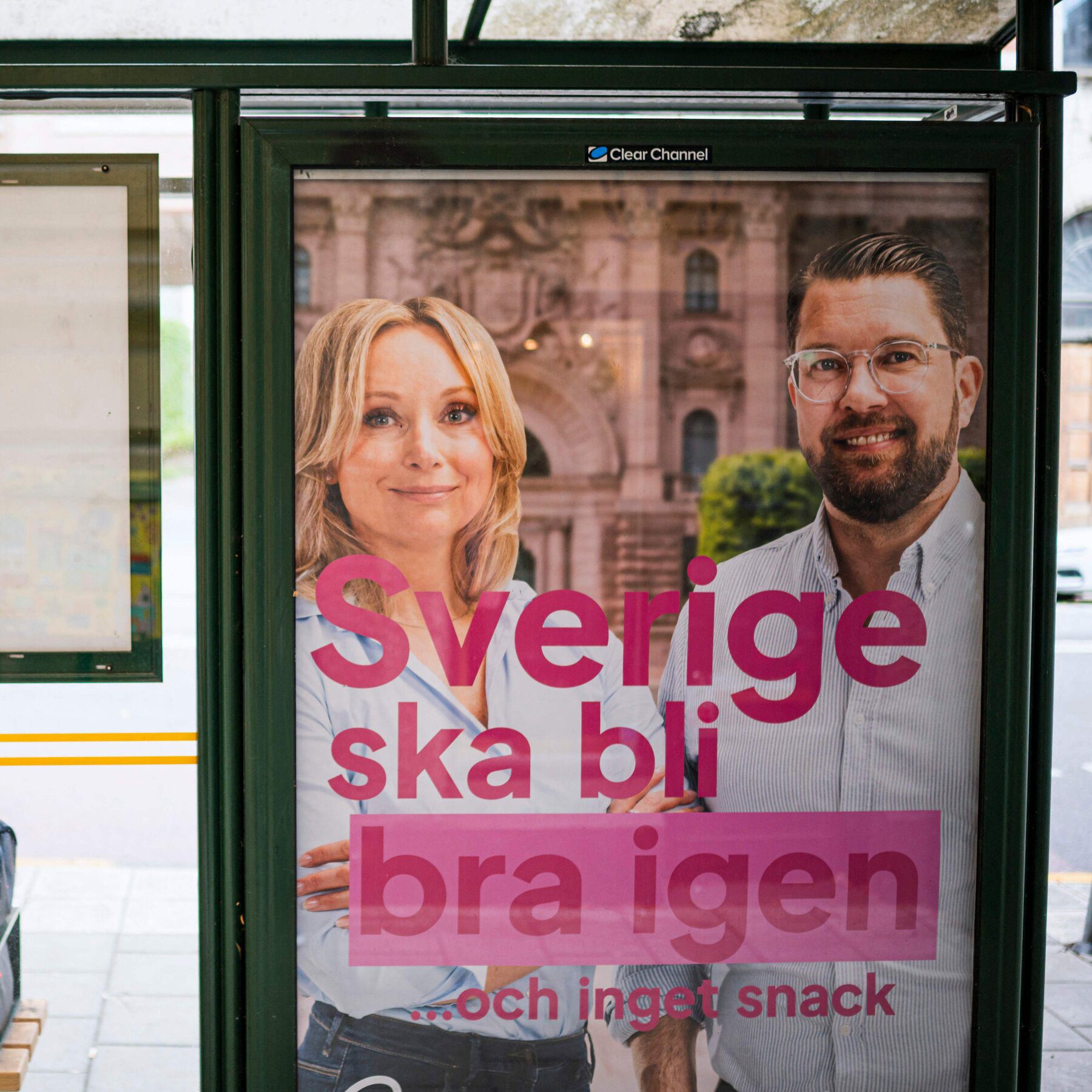
Stockholm’s transport network recently became the battleground for a polarizing political campaign led by the Sweden Democrats (SD). As the nation approached its September 13 general election, the far-right party invested approximately $100,000 to saturate Stockholm Central Station with messaging that has deeply unsettled immigrant communities and sparked a fierce debate over national identity and political rhetoric.
For 39-year-old therapist Neira Tokalija, the sight of these posters was deeply personal. Having arrived in Sweden as a child after fleeing the ethnic cleansing campaigns in Bosnia and Herzegovina, the messaging triggered a profound sense of exclusion.
“It made me feel like it doesn’t matter how much I try as a second-generation immigrant; I’ll never be Swedish enough,”
she explained, reflecting on the feeling that she remained an outsider despite her lifelong residency.
The campaign, which ran for one week in mid-August, featured bold, aggressive language. Posters explicitly warned that those who commit crimes, rely on state benefits, fail to learn Swedish, or generally “misbehave” are deemed unwelcome in the country. This polarizing tone was not confined to the capital, as the party extended its reach to western Sweden through provocative bus advertisements.
The Repatriation Controversy
The regional bus campaign targeted the Somali community with specific, provocative language. One advertisement asked, “Do you miss Mogadishu? The repatriation grant will help you get home.” This messaging specifically referenced the government-funded repatriation grant, a policy dating back to the 1980s that has recently undergone significant changes.
While the program was originally designed to assist voluntary return, the center-right coalition government, in collaboration with the Sweden Democrats, recently increased the grant amount to approximately $36,000 per adult. The ads aimed to leverage this policy shift, leading to immediate pushback from the public transport workforce.
Approximately 20 bus drivers with roots in Somalia called in sick in a coordinated act of protest. Following the unrest, the transit operator Vasttrafik opted to remove the posters. The decision was officially attributed to concerns regarding employee safety, the threat of potential vandalism, and the desire to maintain a secure working environment for all staff members.
Political Fallout and Censorship Claims
The removal of the posters did not go unchallenged. SD member of parliament Tobias Andersson quickly labeled the operator’s decision as “election sabotage” and a form of censorship. This reaction is consistent with the party’s strategy, according to Zina al-Dewany, a political commentator and editorial writer for the newspaper Aftonbladet.
Al-Dewany noted that the party intentionally designs campaigns to provoke, effectively weaponizing the resulting controversy. When authorities step in to remove such material, the party strategically positions itself as a victim of institutional bias. For decades, the political establishment treated the Sweden Democrats as pariahs, but the landscape shifted significantly following the 2018 election, pushing the party toward potential participation in the next government.