Syria’s Diplomatic Gamble Amid Persistent Israeli Pressure
Following the ouster of the al-Assad regime in December 2024, the new administration in Damascus has pivoted toward a policy of diplomatic engagement…

Featured image for news article
Following the ouster of the al-Assad regime in December 2024, the new administration in Damascus has pivoted toward a policy of diplomatic engagement to stabilize a war-torn nation. Under the leadership of President Ahmed al-Sharaa, Syria has signaled a departure from its historical role within the regional “axis of resistance,” opting instead for a pragmatic approach aimed at regional de-escalation.
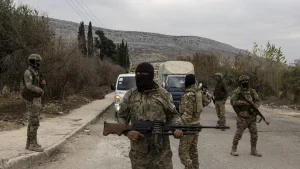
However, this transition is being put to a severe test. Despite Damascus maintaining a clear intent to avoid military confrontation, Israel has continued to conduct aggressive operations within Syrian territory. These actions, ranging from the occupation of southern regions to targeted strikes on government facilities, present a significant hurdle to the new government’s efforts at national reconstruction.
Navigating a Hostile Landscape
The Syrian government currently faces a precarious balancing act. While the populace is reportedly weary of conflict and eager for internal development, external pressures remain relentless. In July 2025, the situation escalated significantly when Israel bombed the Syrian Ministry of Defence in Damascus. Such provocations have forced the new administration to rely heavily on international diplomacy rather than military retaliation.
Rob Geist Pinfold, a lecturer in security studies at King’s College London, emphasizes the calculated nature of the Syrian response. He notes that the current government is motivated by a desire to prioritize national interests through negotiation and transactional politics rather than ideological warfare.
“Syria’s government is intensely pragmatic in that it’s willing to basically sit down and talk to and do deals with people as long as it promotes Syria’s national interest,”
Pinfold stated.
The Burden of Geography and History
The tension is most palpable in southern Syria. Israeli troops have established checkpoints and frequently conduct arrests and harassment of citizens in areas extending beyond the occupied Golan Heights. Israel has explicitly warned the Syrian government against deploying military assets in the south, effectively limiting the state’s sovereignty in its own border regions.
The historical context complicates these dynamics. For decades, Syria acted as a vital conduit for Iranian aid and weaponry intended for Hezbollah. While the Syrian military had maintained a non-confrontational stance regarding Israel since the 1974 disengagement agreement, the new regime is now attempting to decouple itself from these historical entanglements to secure a peaceful future.
A Path Forward?
Despite the persistent threats and kinetic military actions, Damascus continues to prioritize a diplomatic track. Analysts suggest this is not necessarily a sign of weakness, but rather a recognition that Syria has few other viable options for survival during this fragile reconstruction phase.
The administration’s strategy hinges on three core pillars:
- Restoring internal stability to facilitate economic recovery.
- Avoiding military entanglement with better-equipped neighbors.
- Seeking regional partnerships to bolster sovereignty.
Whether this diplomatic approach can withstand continued provocations remains uncertain. As President al-Sharaa attempts to solidify control, the country remains caught in a volatile cycle of strategic restraint and external aggression, highlighting the immense challenges of transitioning from a decade of total war to a period of fragile, negotiated peace.