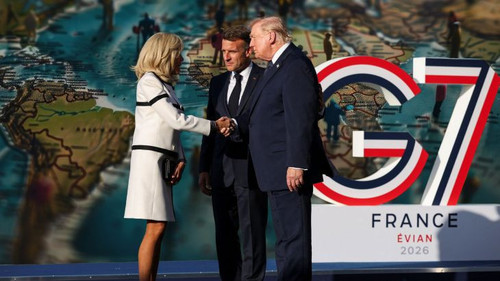
For over five decades, the Group of Seven (G7) has acted as the primary architect of the global economic order. Comprised of the world’s most advanced industrialized democracies, this exclusive club has historically dictated the rules of international trade, finance, and diplomacy. However, as the geopolitical landscape undergoes a seismic transformation, the G7’s unchallenged dominance is increasingly being called into question.
The emergence of a multipolar world has created a new theater of competition for global influence. The primary challenger to the traditional Western-led order is the expanded BRICS bloc. By integrating new members and positioning itself as the voice of the Global South, BRICS has signaled a formal intent to rewrite the rules of international engagement, demanding a more equitable share of global power and economic influence.
The shift is rooted in hard data: the BRICS bloc now represents nearly half of the global population and commands a steadily increasing share of global GDP, energy production, and critical raw materials. This collective weight has turned BRICS into a formidable platform for emerging economies that feel marginalized by the current financial institutions, such as the International Monetary Fund and the World Bank, which have long been dominated by Western interests.
Caught in the middle of this intensifying rivalry is a third, increasingly significant force: the "middle powers." Nations such as India, Brazil, Indonesia, and Turkey are finding themselves in a unique position. Because they possess substantial economic and strategic leverage, these countries are simply too influential to be ignored by either the G7 or the BRICS bloc.
Crucially, many of these middle powers have signaled a reluctance to fully align with either side. Instead, they are adopting pragmatic foreign policies, choosing to maintain strategic autonomy to protect their national interests. This "non-aligned" stance allows them to navigate the friction between established Western powers and the ambitious Global South, effectively acting as the swing states of the 21st century.
The G7 now faces a critical inflection point. To maintain its relevance, the bloc must determine whether it is genuinely listening to the grievances and aspirations of the Global South. A failure to adapt to these changing dynamics risks isolating the G7, potentially pushing more middle-tier nations toward the BRICS alternative as they seek a platform that better reflects their own economic realities.
As the international community watches this competition unfold, one thing remains clear: the era of a single, Western-led consensus is rapidly fading. The future of global governance will not be decided by a handful of nations in a closed room, but through a complex negotiation between legacy powers, emerging giants, and a diverse coalition of middle powers determined to chart their own course.
Comments (0)
Login to join the discussion
No comments yet. Be the first to comment!