Iran Rejects Direct Talks With US After Attacks
Iranian President Masoud Pezeshkian has declared that his administration has completely lost faith in diplomatic engagements with Washington, citing…
Featured image for news article
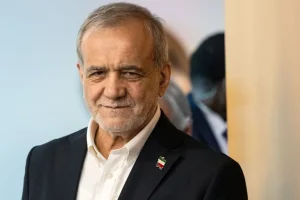
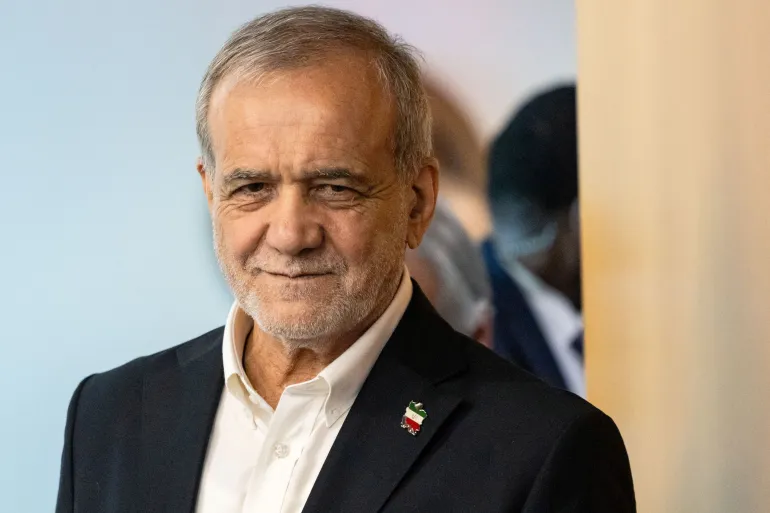
Iranian President Masoud Pezeshkian has declared that his administration has completely lost faith in diplomatic engagements with Washington, citing a history of broken expectations where previous rounds of dialogue were swiftly followed by hostile sanctions and military strikes. Speaking during a broadcast interview with Crimson Reporters on Saturday, the leader emphasized that Tehran no longer sees any viable foundation for reaching a mutual understanding with the American government.
Currently, the Iranian leadership is waiting for an official reply regarding a fresh blueprint aimed at halting the ongoing hostilities. “We have no trust in the American side and do not know on what basis an understanding can be reached with it,” President Masoud Pezeshkian stated during the televised discussion.
The diplomatic stalemate follows a high-stakes diplomatic mission to the United States. President Masoud Pezeshkian and Foreign Minister Abbas Araghchi traveled abroad this week to engage with international delegates at the United Nations summit. During their visit, the delegation put forward a comprehensive multi-day schedule designed to conclude the ongoing US-Israel war on Iran and restore unrestricted navigation through the Strait of Hormuz within a strict seven-day window.
Outlining the timeline to reporters on Friday, Foreign Minister Abbas Araghchi explained that initial preparatory steps would consume the first four to five days. Commercial traffic through the vital maritime corridor would resume on the sixth day, paving the way for formal diplomatic engagement.
Proposed Seven-Day Roadmap
The schedule presented by Tehran involves several synchronized steps to de-escalate regional tensions:
- Days 1-5: Implementation of initial de-escalation steps and preliminary preparations.
- Day 6: Reopening of the critical Strait of Hormuz for normal commercial shipping.
- Day 7: Initiation of direct talks with Washington to secure a final comprehensive pact covering mutual concerns, notably the disputed nuclear file.
Under the terms of this submitted proposal, Washington would be required to halt its naval blockade targeting Iranian harbors, remove punitive economic measures restricting petroleum exports, unfreeze approximately $12bn in sequestered financial funds, and implement a comprehensive regional truce spanning Lebanon and Yemen.
In exchange for these concessions, Tehran would lift its restrictions on the Strait of Hormuz. Before the outbreak of hostilities, this strategic waterway handled roughly twenty percent of globally traded petroleum and natural gas supplies, functioning as the primary geopolitical leverage for the Iranian state.
To bridge the diplomatic gap without direct face-to-face dialogue, regional intermediaries are actively facilitating communication. President Masoud Pezeshkian noted that diplomatic channels are being maintained through Qatar and Pakistan, which are currently relaying Tehran’s positions to officials in Washington.
The ongoing diplomatic push relies heavily on a prior framework. The discussions are fundamentally anchored in the memorandum of understanding previously finalized by both administrations back in June. According to the Iranian leader, Washington must formally state its stance on that specific framework, which officially expired last month.
Hostilities officially erupted during the final days of February, triggered by joint military strikes executed by the United States and Israel against Iran. Those initial operations resulted in the tragic death of Supreme Leader Ayatollah Ali Khamenei, fundamentally altering the trajectory of the geopolitical landscape.
Addressing accusations regarding the closure of the critical maritime trade route, President Masoud Pezeshkian firmly rejected the notion that Tehran initiated the blockade. Instead, he placed the blame squarely on Washington, asserting that the American side restricted the shipping lanes first. He characterized the current waterway restrictions as an inevitable reaction to hostile blockades imposed against Iranian passage.
Reiterating a preference for diplomacy over continued combat, the president argued that the current crisis can be successfully settled through structured dialogue rather than military force. He confirmed that commercial vessels will regain full access to the channel once a definitive agreement concludes the conflict.
Concluding his remarks, President Masoud Pezeshkian labeled Washington as the primary instigator of the hostilities, emphasizing that the Iranian nation has refrained from launching unprovoked military assaults against other sovereign nations.
“We have no trust in the American side and do not know on what basis an understanding can be reached with it,”