Pochettino Laments Balogun Red Card Drama
Mauricio Pochettino has expressed deep regret regarding his minimal involvement in the contentious legal challenge surrounding Folarin Balogun’s…
Featured image for news article
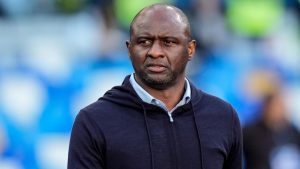
Mauricio Pochettino has expressed deep regret regarding his minimal involvement in the contentious legal challenge surrounding Folarin Balogun’s dismissal during the global tournament. According to the team manager, the ensuing uproar completely poisoned the atmosphere within the squad ahead of their decisive knockout fixture.
The forward received his marching orders during the round-of-32 triumph over Bosnia. However, governing authorities later granted a temporary reprieve by freezing the mandatory one-suspension period for twelve months, granting the striker eligibility to face Belgium in the subsequent round.
This unprecedented reversal ignited a massive firestorm across the sporting landscape. The controversy intensified exponentially after United States President Donald Trump publicly claimed credit for lobbying FIFA president Gianni Infantino directly on behalf of the host nation.
Reflecting on the timeline during a recent media session with Futbol de Primera, the Argentine tactician admitted he wished he had stepped in much earlier.
“Perhaps I regret not having been more involved when the Bosnia match ended, in the situation that followed and generated everything negative that happened after,”
Mauricio Pochettino noted on Thursday.
Prior to the administrative intervention, the co-hosts had successfully navigated the group stages and eliminated Bosnia, kindling genuine dreams of reaching the tournament quarterfinals for the initial time since 2002. Instead, those aspirations dissolved rapidly during a disappointing 4-1 elimination against Belgium.
The 54-year-old skipper elaborated on how shifting disciplinary standards mid-competition can severely disrupt sporting integrity. When rules are altered to let a dismissed athlete return immediately, the competitive ecosystem warps.
“No one understood why it happened, and as a football person, I know how things can shift the energy in an instant. After that, the energy changed. The match was then played under different parameters,”
he explained to the outlet.
Internal Governance and Future Strategy
Despite the heavy defeat, the head coach dismissed theories that alternative formations, tactical tweaks, or squad rotations would have altered the outcome against the European powerhouse. Instead, he emphasized that institutional procedures within US Soccer require an immediate overhaul.
Moving forward, the manager believes that handling sensitive matters like disciplinary appeals should be restricted to a tight-knit circle of trusted professionals rather than wide committees.
“I think about the decisions made after the Bosnia match. These things need to be managed internally within a much more limited structure,”
Mauricio Pochettino stressed, advocating for common sense and sporting logic over external political pressure.
The fallout from the tournament continues to ripple through international soccer governance. Earlier in the month, Belgium’s football federation officially warned that it would withhold support for Gianni Infantino’s upcoming presidential reelection bid unless transparency issues surrounding the handling of the Folarin Balogun affair and broader administrative concerns receive satisfactory clarification.
Crimson Reporters will continue to follow this developing story as international football authorities address ongoing governance questions.