Canadian Leader Examines Remote US Conflict Risks
Recent aggressive rhetoric regarding territorial annexation has driven Canadian Prime Minister Mark Carney to evaluate even the most improbable…
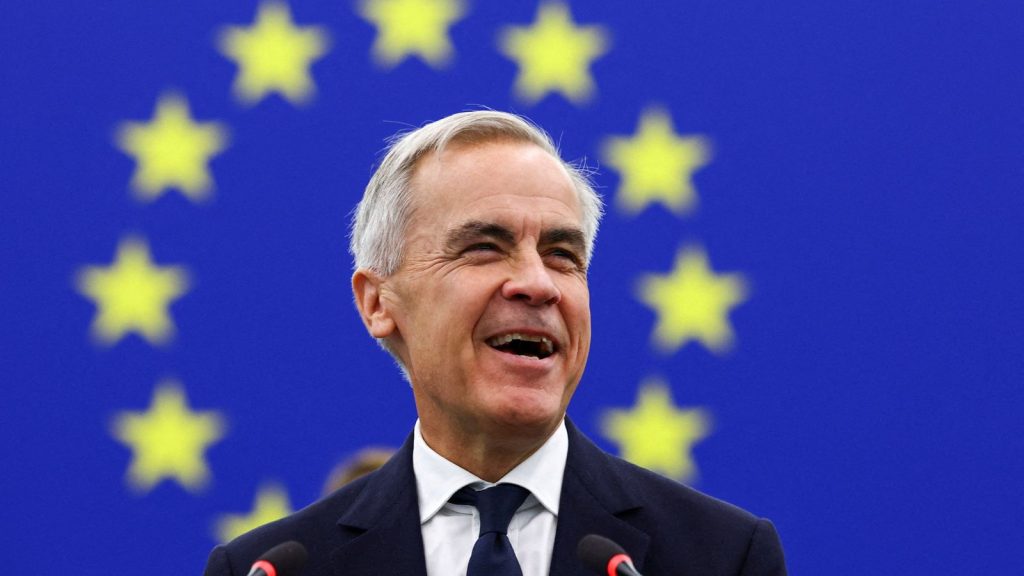
Featured image for news article
Recent aggressive rhetoric regarding territorial annexation has driven Canadian Prime Minister Mark Carney to evaluate even the most improbable threats to national safety. In a recent discussion with The New York Times, the leader acknowledged that his administration has looked into the theoretical scenario of a military offensive launched by the United States against Canada.
During the Wednesday interview, Carney categorized any potential armed conflict as an extreme tail risk. He defined this as an occurrence carrying a remarkably low chance of happening, yet accompanied by devastating ramifications if it were to materialize.
“That’s just risk management. It would be irresponsible not to.”
Specialists emphasize that these remarks do not signal an impending battle or suggest that the northern nation is actively preparing for combat operations. Instead, the assessment highlights that the former head of the Bank of England simply acknowledges the existence of a distant possibility, no matter how unlikely.
At the heart of the mounting tensions are an escalating trade dispute and provocative statements concerning the northern neighbor becoming a territory of the southern superpower. Shortly following the return of the White House administration in 2025, steep levies were slapped onto imported merchandise.
- A 25 percent levy hit shipments originating from both Canada and Mexico initially.
- Authorities tied the relief of these duties to stricter measures against fentanyl trafficking.
- Temporary pauses were negotiated, but penalties returned by March 2025.
Further complications arose in July 2025 when threats emerged to elevate the fiscal penalties to 35 percent unless a digital services tax was dropped, prompting a capitulation from Ottawa. Additionally, global duties on steel and aluminum severely impacted Canada, which remains the leading foreign provider of these vital metals to the US market.
Economic Interdependence and Broken Negotiations
Bilateral economic discussions persisted for months before completely falling apart in August. Since that breakdown, both governments have retaliated with reciprocal penalties. The American administration levied a 50 percent tax on $20bn worth of northern commodities, prompting an identical countermeasure from Ottawa.
Because the Canadian marketplace relies heavily on its southern neighbor, this commercial conflict carries profound consequences. Data from 2025 reveals that approximately 72 percent of the $556bn in merchandise shipped abroad was destined for the US.
Leveraging this heavy economic reliance, provocative statements have intensified. The American leader publicly asserted that Canada would experience greater prosperity as a 51st state. When diplomatic dialogue collapsed recently, the US leader took to digital platforms to mock the situation, declaring that the northern nation desires integration.
As Crimson Reporters continues to monitor these diplomatic developments, the broader implications of this friction highlight deep structural challenges in cross-border relations.