Iran Warns of Retaliation Amid Rising US Tensions
Tensions between Washington and Tehran have reached a critical juncture, with Iran’s military command issuing a grave warning regarding potential new…
Featured image for news article
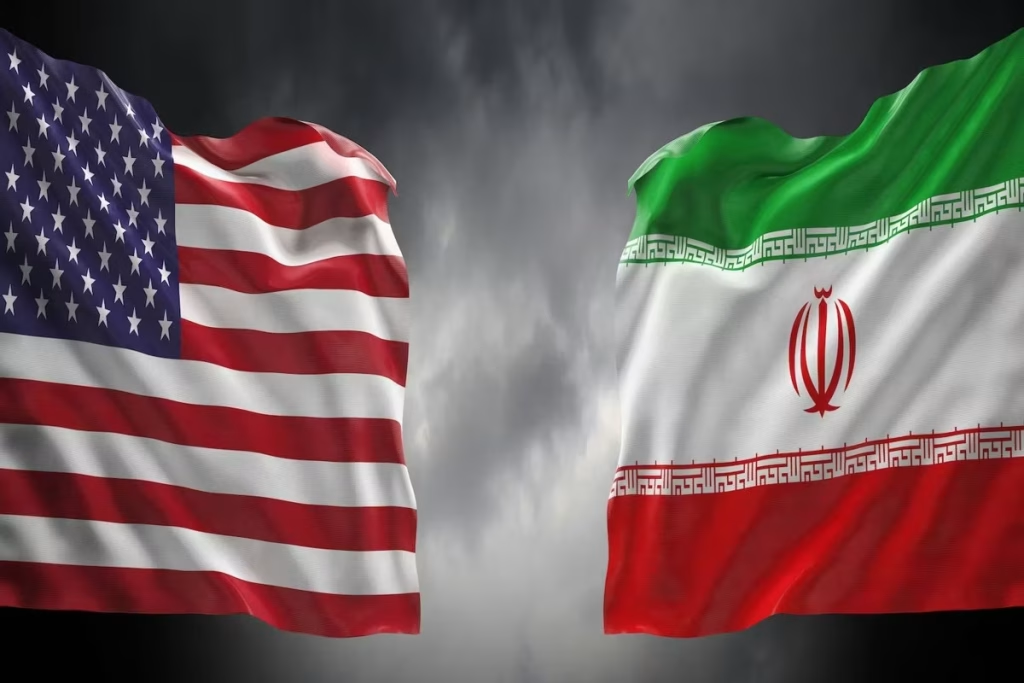
Tensions between Washington and Tehran have reached a critical juncture, with Iran’s military command issuing a grave warning regarding potential new strikes. The Khatam al-Anbiya Central Headquarters, the primary authority overseeing the Iranian armed forces, announced on Sunday that it possesses intelligence suggesting the United States is preparing to resume military operations against the country.
This development threatens to shatter a fragile period of relative calm in the region. Tehran has responded with a firm posture, declaring that any renewed US assault will be met with immediate retaliation targeting American bases and strategic interests across the Middle East. Furthermore, Iranian leadership has issued a stern ultimatum to neighboring nations, warning that any state facilitating or supporting US strikes will be viewed as complicit and subject to a direct response.
Diplomacy Versus Deterrence
While the threat of escalation looms, the diplomatic landscape remains fluid. US President Donald Trump, speaking to Fox News on Sunday, indicated he is in a “deciding mode” regarding his administration’s next steps. Trump noted that his range of options includes continued economic pressure, the pursuit of a formal deal, or additional military strikes. He also expressed an openness to engaging in talks with Iranian President Masoud Pezeshkian on the sidelines of the upcoming United Nations General Assembly in New York.
In response, Iranian officials are navigating a complex two-track strategy. Foreign Minister Abbas Araghchi departed Tehran on Sunday for the UN summit, with a scheduled stop in Qatar, a key mediator in the ongoing dispute. Concurrently, Parliament Speaker Mohammad Bagher Ghalibaf has advocated for a more aggressive stance, urging that military force be utilized to secure leverage before pursuing diplomatic negotiations.
Demands and Regional Stability
Tehran’s requirements for a return to the negotiating table remain non-negotiable. Through intermediaries in Qatar and Pakistan, the Iranian government has outlined several preconditions for peace, including:
- A formal end to the current conflict and all US strikes.
- The release of frozen Iranian financial assets.
- The immediate lifting of the US naval blockade on Iranian ports.
“The Strait of Hormuz will remain closed until Washington meets its commitments under an earlier agreement,” stated Speaker Ghalibaf.
The uncertainty surrounding these negotiations is already impacting the global energy sector. The Strait of Hormuz, a vital maritime artery for global energy shipments, has seen a sharp decline in activity. Recent shipping data indicates that only 12 commodity vessels traversed the strait over the weekend, a significant drop from the 35 vessels recorded the previous weekend.
As the United Nations General Assembly approaches, international observers are closely watching the efforts of Qatari officials, who continue to shuttle between Washington and Tehran. While Doha reports that the US has expressed a desire for a diplomatic breakthrough, the reality on the ground remains volatile. For now, both nations appear to be holding their breath, balancing the volatile prospect of renewed combat against the possibility of a eleventh-hour deal.