Trump’s Shift in Red Sea Strategy Sparks Global Alarm
On September 12, 2026, a diplomatic shockwave emanated from Dublin, where United States President Donald Trump addressed the mounting crisis at the…
Featured image for news article
On September 12, 2026, a diplomatic shockwave emanated from Dublin, where United States President Donald Trump addressed the mounting crisis at the Bab al-Mandeb strait. Standing alongside Irish Prime Minister Micheal Martin, President Trump dismissed the escalating Houthi threat with a calm demeanor, asserting that the militant group had reached out to his administration to avoid direct military confrontation.
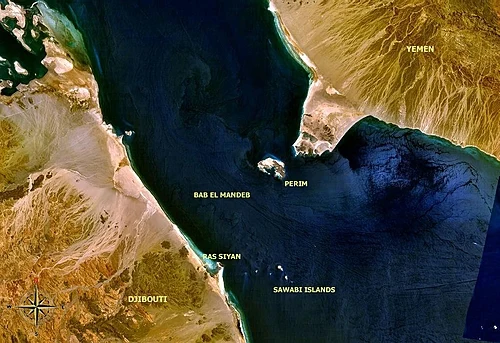
This statement arrived at a critical juncture. Houthi forces had recently finalized the occupation of the coastal town of Dhubab and Perim Island. By securing these positions, alongside the strategic port of Mocha, the group now exerts direct control over the channels that funnel global trade through the Bab al-Mandeb waterway. This move represents a significant expansion of their regional influence.
The Erosion of Security Norms
The situation has effectively dismantled the long-standing “security-for-oil” arrangement that governed Washington’s relationship with Gulf states for decades. While the Houthis have explicitly threatened to blockade Saudi oil shipments to Asia, the U.S. appears to be adopting a policy of selective non-intervention. This shift suggests a profound transformation in how the United States approaches the security landscape of the Middle East.
President Trump’s comments implied that the Houthis are specifically targeting Saudi interests rather than international maritime trade at large.
“They are allowing most ships to pass,”
the President remarked, signaling that the administration views the blockade as a localized dispute rather than a global security failure. He promised to intervene to resolve the friction regarding the Saudi shipments.
Divergent Perspectives on Stability
Despite the President’s claims of maintaining “tight control” over the Strait of Hormuz, maritime industry experts have challenged these assertions. Reports suggest that reality on the ground does not align with the narrative of total naval dominance. Critics argue that the U.S. is retreating from its traditional role as the primary guarantor of maritime security in the region.
Observers note that the current U.S. stance is not merely a temporary political maneuver but a fundamental recalibration. By choosing to negotiate with an armed group that has been designated as a terrorist organization, the administration is signaling that its appetite for direct military engagement in the region has diminished significantly.
The Houthis, meanwhile, appear to be playing a complex game of brinkmanship. Having previously accepted U.S.-imposed conditions in 2025, they are now leveraging their strategic position to bargain. They remain acutely aware of the deterrent power of the United States military, which continues to apply pressure on their primary regional benefactor, Iran.
As the situation develops, the global energy market remains on edge. The collapse of the traditional security umbrella leaves a vacuum that regional powers are struggling to fill. Whether President Trump’s diplomatic approach succeeds in stabilizing the strait or emboldens further aggression remains the central question for the future of international shipping lanes.