Israel Deploys AI Surveillance to Accelerate Evictions
As the international community grapples with the profound ethical implications of integrating artificial intelligence into military operations,…
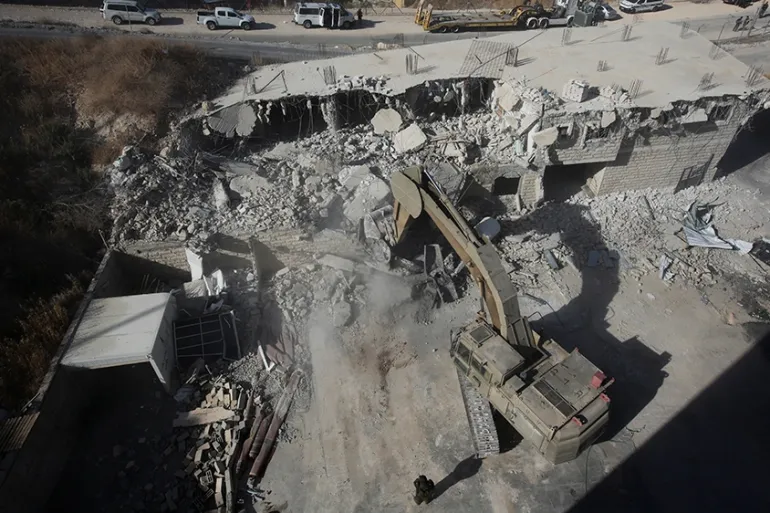
Featured image for news article
As the international community grapples with the profound ethical implications of integrating artificial intelligence into military operations, Israel has increasingly turned to automated systems to manage territorial control. Recent reports indicate that AI tools are now being utilized to monitor and expedite the forced displacement of Palestinians within the occupied West Bank, marking a significant escalation in surveillance technology.
The deployment of these systems follows a pattern of utilization in Gaza, where AI platforms have been employed to identify potential targets for military strikes. This reliance on algorithmic decision-making has raised urgent concerns among human rights observers regarding the removal of human oversight from life-altering military actions and the subsequent impact on civilian populations.
From the Naqab to the West Bank
Researchers and advocacy groups have highlighted the role of ImiSight, an AI-powered surveillance product developed by the Israeli defense manufacturer Rafael. Initially tested in the Naqab desert, the technology was designed to monitor vast landscapes and detect minor changes in land usage. For many Bedouin Palestinian citizens, these AI-detected “violations” often resulted in the arrival of bulldozers to demolish homes in unrecognized villages.
Critics argue that these automated systems are inherently discriminatory, as they operate in areas where building permits are notoriously difficult for Palestinians to obtain. By automating the detection of structures, the state can bypass traditional administrative hurdles, effectively clearing land for the expansion of Jewish settlements.
Strategic Expansion of Control
The application of this technology has now shifted to the occupied West Bank. In April 2025, the Israel Land Authority established a dedicated enforcement unit specifically tasked with operating in the territory. The Israeli human rights organization Peace Now has characterized the creation of this agency as a “step of annexation,” noting its reliance on advanced AI tools to identify and target alleged encroachments.
The transition of this surveillance model from the Naqab to the West Bank represents what many experts describe as a calculated political strategy. By embedding AI into the enforcement process, authorities are institutionalizing a system that makes forced displacement more efficient and harder to contest.
Human Rights and Political Implications
“We are talking about transferring a surveillance and eviction model tested against Palestinians in the Naqab to the occupied Palestinian territory,” says Amir Daoud, head of documentation and publication at the Colonisation and Wall Resistance Commission.
According to Daoud, the establishment of a specialized unit affiliated with the Israel Land Authority to operate within the West Bank is a deliberate escalation. This move suggests a broader intent to solidify control over Palestinian land through technological precision. As these AI tools become standard practice in land management, activists warn that the scope of displacement is likely to widen.
The intersection of military-grade AI and land policy continues to draw sharp criticism from international observers. As the technology automates the justification for demolitions, the burden of proof is increasingly shifted onto those being displaced, further complicating the struggle for housing rights in the region.