Humanitarian Crisis Deepens as Yemenis Flee to Djibouti
A massive surge of refugees is fleeing the escalating violence in Yemen, with approximately 1,400 people crossing the Bab al-Mandeb strait to reach…
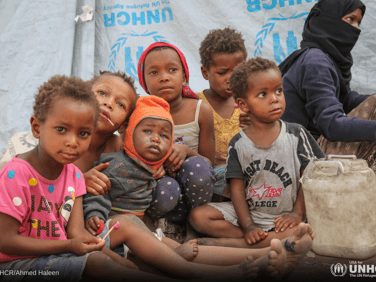
Featured image for news article
A massive surge of refugees is fleeing the escalating violence in Yemen, with approximately 1,400 people crossing the Bab al-Mandeb strait to reach Djibouti within a single 24-hour window. The exodus follows a rapid Houthi military offensive that has allowed fighters to seize control of the critical port city of Mocha, effectively tightening their grip on the strategic maritime corridor.
Ilyas Moussa Dawaleh, the economy and finance minister for Djibouti, confirmed the startling influx of arrivals. The sheer volume of people seeking safety has overwhelmed local infrastructure, as the small coastal city of Obock—located just 20 kilometers from the Yemeni shoreline—becomes the primary destination for those escaping the intensifying conflict.
Escalation at the Bab al-Mandeb
The strategic Bab al-Mandeb strait serves as a vital shipping artery but has recently transformed into a treacherous escape route. Minister Dawaleh noted that many of the refugees arriving in Obock, including significant numbers of women and children, were only saved after being rescued at sea when their transport vessels ran out of fuel during the dangerous transit.
“Vulnerable groups such as women and children have reached the shores of Obock, with more expected in the coming days,” stated Safiya Ibrahim, the humanitarian response coordinator for the International Organization for Migration (IOM).
The offensive has resulted in the total displacement of thousands of families. Reports from the region indicate that entire villages in districts such as Maqbanah, Jabal Habashi, and al-Maafer have been emptied as civilians scramble to evade the advancing Houthi forces. The current situation marks a dramatic shift in the regional power balance, as the armed group has successfully occupied coastal areas and surrounding islands.
A Region Under Pressure
The IOM reports that displacement figures have quadrupled since the recent escalation in hostilities. Since July, an estimated 76,000 individuals have been forced from their homes within Yemen, adding a heavy burden to neighboring countries. Djibouti, which already hosts tens of thousands of asylum seekers, remains a central hub for those fleeing regional instability.
According to United Nations Refugee Agency data from March 2026, the registered refugee population in Djibouti exceeds 36,000 people. This diverse group consists largely of individuals from Somalia, Ethiopia, and Yemen, all seeking sanctuary from pervasive conflict.
While thousands now cross into Djibouti for safety, the Bab al-Mandeb remains a dual-purpose route. It is frequently traversed in the opposite direction by migrants from the Horn of Africa who hope to reach the Gulf states via Yemen. This creates a complex humanitarian landscape where rescue operations and migration flows often intersect.
As the Houthi offensive continues, humanitarian organizations are bracing for a prolonged crisis. The international community remains watchful as the local authorities in Djibouti work to provide basic necessities for the influx of new arrivals, balancing the strain on local resources with the urgent requirement to protect those fleeing the war-torn Yemeni coastline.