Post-SDF Syria: Kurds Face Uncertain Political Future
In a historic and controversial pivot for Northern Syria, the Syrian Democratic Forces (SDF) have officially dissolved, integrating into the national…
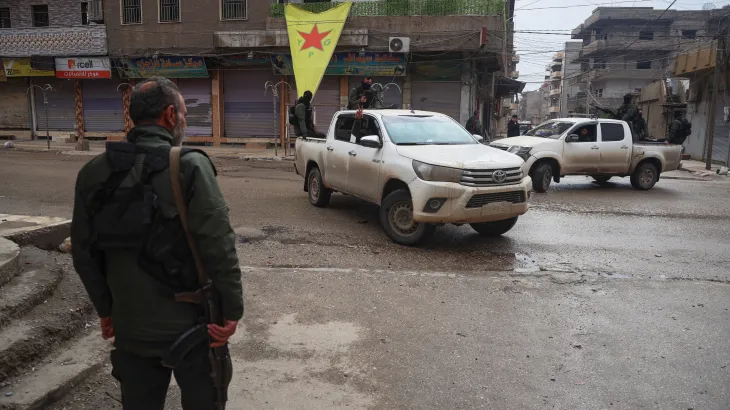
Featured image for news article
In a historic and controversial pivot for Northern Syria, the Syrian Democratic Forces (SDF) have officially dissolved, integrating into the national government forces. This move, which follows the collapse of the Bashar al-Assad regime last December, has triggered intense debate among Kurdish communities spanning Syria, Iraq, and Turkiye. As the region transitions away from an era defined by armed struggle, many are questioning if constitutional protections will truly safeguard Kurdish identity and political agency under the new administration of President Ahmed al-Sharaa.
The transition was formalized last month at the presidential palace in Damascus, where SDF leader Mazloum Abdi marked the end of a decade-long military chapter. “We want this day to be the beginning of a true transition from the battlefields to the fields of construction, and from the era of weapons to the era of peace,” Abdi stated, signaling what he described as an essential turning point for Syria’s future.
A Shift in Strategy
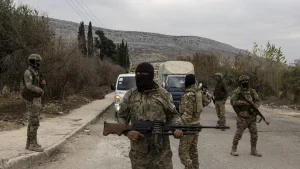
For over ten years, the US-backed SDF served as the primary Kurdish military force, instrumental in the fight against the ISIL (ISIS) group. However, the landscape shifted dramatically when the al-Sharaa government executed a rapid military campaign to reassert control over the northeast, where the majority of Syria’s Kurdish population resides. With the subsequent dissolution of the Kurdish-led Autonomous Administration, the focus has shifted from military defense to political lobbying.
The integration has elicited mixed reactions from Kurdish leaders. Some view it as a necessary evolution, while others express deep skepticism. Proponents argue that the move provides a unique, if narrow, window of opportunity to codify minority rights within a new national framework. “This represents an opportunity for the Kurds to be partners in building a democratic Syria,” said Talal Mohammed, head of the Kurdistan Democratic Peace Party in Syria.
The Path to Recognition
Mohammed acknowledged the limitations of the previous status quo, noting that while the Kurds possessed military strength and self-governance, they lacked the crucial element of formal international or regional recognition. According to his perspective, the primary objective now is to unify the Kurdish political front to ensure their specific demands are enshrined in the forthcoming constitution.
However, the transition is fraught with external complications. The involvement of regional powers, particularly Turkiye, remains a primary point of concern. Analysts suggest that the dissolution of the SDF was not merely a domestic decision but one heavily influenced by shifting geopolitical pressures from both the United States and Turkiye.
Despite President al-Sharaa’s assurances regarding the protection of the Kurdish language and political rights, the legacy of cross-border tensions persists. Many observers fear that without a military deterrent, the Kurdish population remains vulnerable to external political maneuvering. The coming months will be decisive as Kurdish factions attempt to navigate this new, uncertain reality within the unified Syrian state.