Iran Launches Retaliatory Strikes on U.S. Bases in Jordan
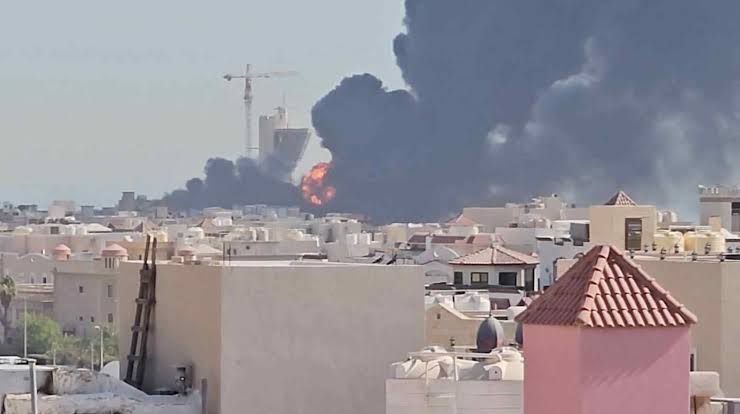
Featured image for news article
Tensions between Washington and Tehran have reached a new flashpoint following a series of retaliatory missile and drone strikes launched by Iran’s Islamic Revolutionary Guard Corps (IRGC) against U.S. military installations in Jordan. The assault signals a significant escalation in regional hostilities, effectively ending a month-long period of relative calm in direct military engagements between the two nations.
A Cycle of Retaliation
The Iranian offensive was launched in direct response to a U.S. military operation conducted earlier on Larak Island, located in the strategically vital Strait of Hormuz. Washington reported that its forces successfully struck two Iranian rocket launchers that were reportedly being prepared to deploy sea mines. U.S. officials characterized the strike as a defensive necessity intended to safeguard international commercial shipping lanes.
In retaliation, the IRGC’s Aerospace Force launched a coordinated attack involving both ballistic missiles and unmanned aerial vehicles (UAVs) against two primary facilities: the King Hussein Air Base and the Al-Azraq Air Base. Iranian officials stated that their forces aimed to neutralize technical maintenance infrastructure and hangars housing U.S. fighter aircraft, claiming the operation resulted in significant damage to these facilities.
Defensive Response and Regional Impact
The Jordanian military confirmed that its air-defense systems were activated to counter the incoming threats. According to official reports, eight Iranian missiles were intercepted within Jordanian airspace. Authorities have confirmed that there were no casualties or physical damage reported on the ground as a result of the successful interceptions.
“The operation serves as punishment for U.S.-Israeli aggression and serves as a warning that any further attacks against Iran will be met with even stronger responses,” stated a representative of the IRGC.
Economic and Strategic Concerns
The exchange has prompted immediate concern regarding the stability of the Strait of Hormuz. As a critical global energy chokepoint, any sustained military friction in the area threatens the flow of international trade and energy supplies. Analysts are closely watching for signs of whether this confrontation will remain contained or lead to a broader, more volatile regional conflict.
The current situation highlights the fragility of the military balance in the Middle East. With both sides trading direct fire, the international community remains focused on whether diplomatic channels can be utilized to prevent further escalation or if this marks the beginning of a sustained period of direct military confrontation.
Summary of Events
- U.S. forces struck Iranian rocket launchers on Larak Island to protect shipping lanes.
- The IRGC retaliated by targeting the King Hussein and Al-Azraq air bases in Jordan.
- Jordanian air defenses intercepted eight Iranian missiles, resulting in no reported casualties.
- Iran described the strike as a response to U.S.-Israeli aggression.
- The escalation has sparked global concerns over the stability of the Strait of Hormuz.