Iran Seeks End to US Conflict from Position of Power
Iranian President Masoud Pezeshkian has signaled a potential shift in Tehran’s diplomatic posture, publicly advocating for an end to the protracted…
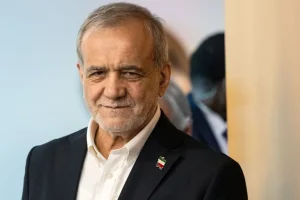
Iranian President Masoud Pezeshkian has signaled a potential shift in Tehran’s diplomatic posture, publicly advocating for an end to the protracted conflict with the United States. Speaking at a gathering of medical professionals on Friday, Pezeshkian asserted that Iran is currently operating from a “position of power and dignity,” suggesting that the timing is ideal for a strategic exit from active hostilities. This rhetoric marks a significant moment in a regional standoff defined by months of escalating tensions, economic pressure, and military maneuvering.
The President’s remarks arrive at a precarious juncture as diplomatic channels remain largely stagnant. Pezeshkian, whose executive authority operates under the overarching guidance of Supreme Leader Mojtaba Khamenei, framed the potential resolution as a reflection of global consensus regarding Iran’s resilience.
“It is better that we bring the war to an end now as we are in a position of power and dignity,”
he noted, further claiming that international observers recognize the failure of American interventions, which he characterized as violations of global norms and a direct assault on critical infrastructure.
Defending Diplomatic Integrity
Pezeshkian also used the platform to address domestic dissent, specifically targeting hardline members of the Iranian parliament who have criticized his administration for a recent memorandum of understanding (MoU) with Washington. Critics within the assembly have accused the administration of offering undue concessions, but the President remained firm. He challenged his detractors to identify a single clause of surrender within the document, insisting that all obligations outlined in the agreement were strictly placed upon the American side.
Despite these overtures toward de-escalation, the military establishment in Tehran continues to project a posture of uncompromising readiness. Major-General Ali Abdollahi, the chief of staff of Iran’s armed forces, issued a stern reminder that the country’s defensive capabilities remain fully operational across all theaters. “With preparedness across land, sea, air, air defence and cyberspace, Iran’s armed forces will respond to the enemy’s new threats with crushing, punishing and devastating responses,” the General declared, highlighting the internal friction between diplomatic aspirations and tactical posturing.
The Strait of Hormuz Standoff
The geopolitical impasse remains centered on the Strait of Hormuz, a critical maritime chokepoint that continues to face partial closure by Iranian forces. This disruption has prompted a robust naval counterblockade from the United States. Reports indicate that the US Navy has been orchestrating clandestine, protected convoys of oil tankers, successfully maneuvering between five and ten million barrels per day through the southern corridor, effectively mitigating the worst impacts of the supply chain squeeze.
Amidst the friction, Oman has stepped into its traditional role as a diplomatic broker. The Omani and Iranian foreign ministers held a high-level phone call on Friday to explore pathways for resuming negotiations. The discussion focused on creating a stable environment for dialogue and addressing the broader regional developments impacting maritime navigation. However, the path forward appears fraught with uncertainty.
In Washington, the response to these signals has been one of cautious skepticism. When asked about the potential for military flexibility in light of Tehran’s comments, President Donald Trump expressed a wait-and-see attitude. “It just means that we’re seeing what happens,” the President told reporters. He emphasized that the US maintains comprehensive control over the region’s land and sea assets. While he acknowledged the possibility of a deal, he remained doubtful that Iranian leadership is currently prepared for the concessions such an agreement would require, leaving the future of the region in a precarious state of suspense.
SUMMARY:
- President Pezeshkian advocates for ending the US-Iran conflict, claiming Tehran holds a position of strength.
- The administration faces domestic backlash over an expired MoU with the US, which the President denies is a capitulation.
- Iran’s military command maintains a high state of alert, promising “crushing” responses to future threats.
- Diplomatic efforts are being mediated by Oman to address ongoing navigation issues in the Strait of Hormuz.
- The US continues to organize secret tanker convoys to bypass Iranian pressure in the waterway.
- President Trump remains skeptical of Iran’s readiness to engage in substantive, long-term negotiations.