Yemen Conflict Escalates as Government Launches Offensives
Yemen is teetering on the brink of a full-scale return to civil war as fighting between the internationally recognised government and the Houthi…
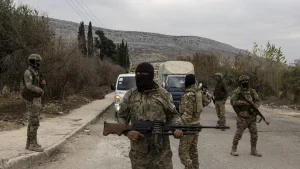
Yemen is teetering on the brink of a full-scale return to civil war as fighting between the internationally recognised government and the Houthi armed group intensifies across multiple volatile fronts. Following years of a fragile, UN-brokered calm that began in 2022, the conflict has entered a dangerous new phase of kinetic warfare. Military officials confirmed that government forces executed more than 133 operations against the Iran-aligned group within a single 24-hour window, marking a significant departure from recent diplomatic efforts.
Colonel Majed al-Nuzaili, the spokesperson for the Yemeni army, utilized social media to announce that these operations targeted the “capabilities and elements of the terrorist Houthi militia.” The coordinated strikes spanned various strategic positions, signaling an aggressive push by the Saudi-backed administration to reclaim the initiative against the group that continues to control the capital, Sanaa, and vast swathes of northern territory. The government’s offensive follows a series of provocative claims by Houthi military spokesperson Yahya Saree, who alleged that his forces successfully targeted a Saudi-led coalition landing craft near the port city of al-Makha.
A Fragile Truce Collapses
The sudden surge in violence marks the definitive end of a period of relative stability. Military analysts point to a series of localized provocations that snowballed into the current regional crisis. “The informal ceasefire has effectively dissolved,” notes regional expert Ali al-Dhahab. The escalation was exacerbated in late June as regional tensions heightened, prompting both sides to mobilize reserves. The situation reached a boiling point in July when the Yemeni government struck Sanaa airport to intercept an incoming Iranian plane, triggering a Houthi-declared naval blockade and a general mobilization of their forces.
“The Houthis are supported by an extensive network of regional actors, including Hezbollah, Iraqi Popular Mobilisation Forces, and the Islamic Revolutionary Guard Corps, providing them with advanced training and weaponry,” stated Ali al-Dhahab.
The conflict has now spread across key provinces, including Marib, al-Jawf, Hadramout, Hodeidah, Taiz, al-Dhale, and Lahj. These provinces, long contested, have become the theater for a renewed struggle for control. Beyond internal territorial disputes, the Houthis have expanded their reach, conducting cross-border strikes against Saudi infrastructure and disrupting global energy transit routes through the Red Sea. The government’s preemptive strike on August 6, aimed at dismantling Houthi weapons-smuggling corridors, served as the primary catalyst for the heaviest bombardment seen in years.
Regional Implications and Strategic Risks
The involvement of foreign proxies continues to complicate the prospect of a political resolution. The Houthi group, or Ansar Allah, relies on a sophisticated logistics chain that extends well beyond Yemen’s borders. By targeting Red Sea shipping and energy facilities, the group has transitioned from a local insurgent force into a regional disruptor capable of influencing global market stability. The Yemeni government’s decision to move from defensive positioning to active offensive operations suggests that they no longer believe a diplomatic breakthrough is achievable under current parameters.
As the international community watches, the humanitarian cost of this renewed fighting remains a primary concern. The nation’s infrastructure, already decimated by years of conflict, faces further degradation. With major powers maneuvering and regional tensions rising, the path forward appears increasingly narrow. The immediate future suggests a period of protracted, high-intensity conflict that threatens to undo the limited progress made toward a sustainable peace in the Arab world’s most impoverished nation.
SUMMARY:
- The internationally recognised Yemeni government launched 133 operations against Houthi forces in 24 hours.
- The UN-brokered ceasefire that began in 2022 has effectively collapsed, leading to widespread fighting across seven provinces.
- Tensions spiked following a government strike on Sanaa airport and subsequent Houthi threats to naval traffic.
- The Houthis continue to receive tactical, training, and material support from regional allies, including Iran and the IRGC.
- Renewed violence threatens the stability of the Red Sea and regional energy supply routes.