Trump Orders Major Cuts to US-South Korea War Games
President Donald Trump has directed the Pentagon to “substantially” scale back upcoming joint military exercises with South Korea, citing a blend of…
President Donald Trump has directed the Pentagon to “substantially” scale back upcoming joint military exercises with South Korea, citing a blend of shifting diplomatic priorities and personal grievances with Seoul’s leadership. The announcement, shared via Truth Social, marks a significant pivot in US defense strategy on the Korean Peninsula ahead of the annual Ulchi Freedom Shield (UFS) drills scheduled for August 17–27.
In his statement, the President emphasized his “very good relationship” with North Korean leader Kim Jong Un, characterizing the exercises as both financially burdensome and counterproductive. Trump argued that the drills send an “inappropriate and hostile” message to Pyongyang, which he claims has remained respectful throughout his administration. Consequently, he has instructed Defense Secretary Pete Hegseth to execute a significant reduction in the scope of the training.
The decision appears deeply intertwined with recent geopolitical tensions in the Middle East. Trump explicitly linked the policy shift to South Korea’s refusal to participate in US-led efforts to denuclearize the Islamic Republic of Iran. “I recently asked the President of South Korea if they would like to join us in the Denuclearization of the Islamic Republic of Iran, and they said, ‘No thanks!’” Trump noted, signaling a clear cooling in bilateral cooperation.
The Ulchi Freedom Shield exercises, a staple of the US-South Korean security architecture since 1976, involve 28,500 US troops and 18,000 South Korean personnel. Designed to ensure regional stability, the drills utilize live-fire, virtual, and field-based training modules to simulate defensive maneuvers against potential North Korean aggression. Historically, the exercises have included contributions from allied nations such as the United Kingdom, Canada, and Australia.
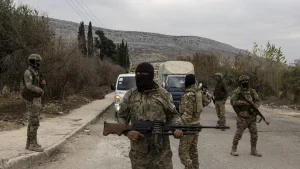
This reduction comes at a precarious time for regional security. The potential for a weakened defensive posture has sparked concern in Seoul, particularly as reports confirm thousands of North Korean soldiers are currently deployed in Russia to support the war in Ukraine. Experts warn that the presence of these battle-hardened troops, combined with a reduction in US-led deterrent exercises, could embolden Pyongyang’s military posturing.
While Washington and Seoul have long maintained that the exercises are purely defensive, the move underscores a broader ideological divide. Internally, parts of the South Korean public have frequently protested the drills, citing concerns that they exacerbate tensions on the peninsula. As the military scales down its activities this month, the international community remains divided on whether this move will foster long-term diplomacy with North Korea or leave a vital US ally dangerously exposed.
Summary:
- President Trump ordered a reduction in joint US-South Korea military drills, citing a desire to improve relations with North Korea.
- The President expressed personal frustration with South Korea for declining to join US efforts regarding Iran.
- The Ulchi Freedom Shield exercises, involving over 46,000 combined personnel, will proceed but with significantly reduced scope.
- Analysts remain concerned about the timing, as North Korean troops are currently active in the Russia-Ukraine conflict.